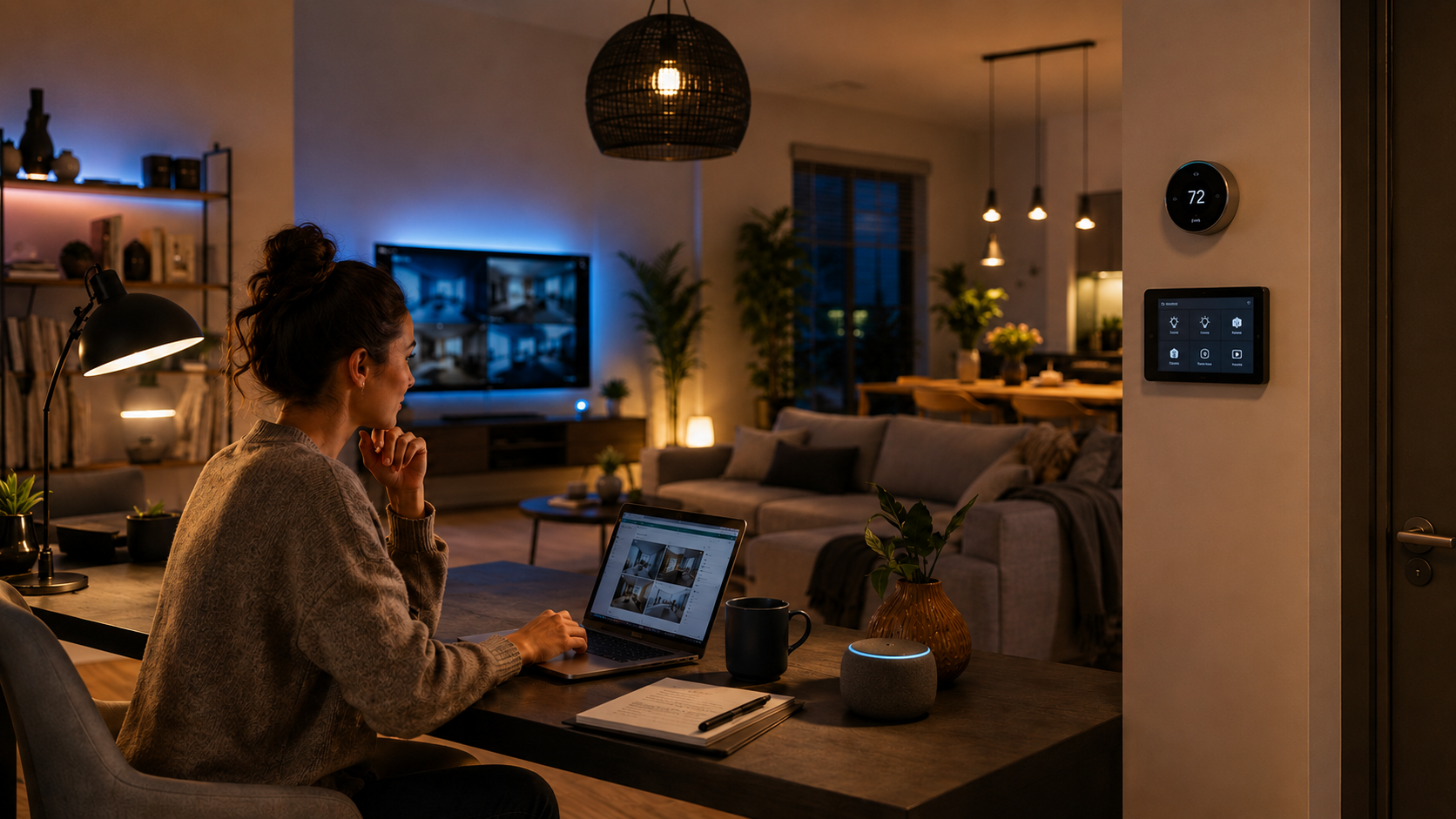
Smart home technology used to feel like a luxury.
A voice assistant could play music. A smart light could turn on from a phone. A thermostat could adjust itself automatically. For many people, these tools seemed useful, but not essential.
That is starting to change.
As more professionals work flexible schedules, manage busy households, and rely on connected devices throughout the day, smart home technology is becoming part of everyday productivity.
What Is Smart Home Technology?
Smart home technology refers to devices in the home that connect to the internet and can be controlled through an app, voice assistant, or automated setting.
That includes smart speakers, lights, thermostats, cameras, doorbells, locks, appliances, and home office devices.
A helpful way to think about it is this: smart home tools allow people to manage parts of their home without doing every task manually. Lights can turn on automatically. A thermostat can adjust based on the time of day. A security camera can send an alert. A voice assistant can set reminders, manage calendars, or control connected devices.
The goal is not just to make a home feel futuristic. It is to make daily routines easier to manage.
Why It Matters for Modern Professionals
Work and personal life are more connected than they used to be.
Many people now start their day by checking messages at home, taking video calls from a home office, managing family schedules, and moving between personal and professional tasks. When the home is also part of the workday, the technology inside it can affect focus, comfort, and productivity.
For example, better lighting can improve a video meeting setup. A smart speaker can help manage reminders. A connected thermostat can create a more comfortable workspace. A security system can give peace of mind during a busy day.
These may seem like small improvements, but together they can make daily life feel more organized.
When Convenience Becomes a Connected Experience
The real value of smart home technology is not one device by itself. It is how multiple tools work together.
A morning routine might adjust the lights, start the coffee maker, read calendar reminders, and prepare the home office before the first meeting begins. A security alert might reach a phone while someone is away. A voice assistant might help set a reminder during a busy workday.
This connects to a larger trend in technology: people expect tools to work together, not create extra steps.
That same expectation exists in business communication. Companies like NEVTIS Corp help businesses modernize the way teams communicate through voice, video, messaging, and collaboration tools. Whether at home or in the workplace, people want technology that feels connected, reliable, and easy to use.
Looking Ahead
Smart home technology will likely become more practical and less noticeable over time.
Instead of feeling like separate gadgets, connected devices may become part of the background of daily life, helping people save time, manage routines, and stay focused.
For entrepreneurs, professionals, and growing teams, the bigger lesson is simple: technology works best when it reduces friction.
Whether it is a smart home device or a business communication system, the goal should be the same: to make life and work easier, not more complicated.
Tech Today Takeaway: Smart home technology is no longer just about convenience. It is becoming part of how people manage time, improve routines, and create more connected work-life experiences.
Leave a Reply