
Imagine landing in a foreign country and connecting to a high-speed local network instantly, without ever hunting for a kiosk or fumbling with a paperclip to swap tiny plastic chips. This seamless experience is no longer a futuristic dream but a tangible reality driven by the rapid adoption of eSIM technology. We are currently witnessing the end of the physical SIM card era and the dawn of purely digital connectivity, a shift that promises to liberate mobile users from physical constraints.
The Evolution from Physical to Digital
For over three decades, the Subscriber Identity Module (SIM) has been the gatekeeper of mobile connectivity. It began as a credit-card-sized peripheral in the early 1990s, shrinking over time to the mini, micro, and finally, the nano-SIM. However, despite the reduction in size, the fundamental concept remained the same: a physical token was required to authenticate a user on a network. This physical dependency created friction, logistical waste, and limitations on device design.
The eSIM, or embedded SIM, fundamentally changes this architecture. It is not a card you insert, but a microscopic chip soldered directly onto the device’s motherboard during manufacturing. Technically known as an eUICC (Embedded Universal Integrated Circuit Card), this chip allows users to download and store multiple carrier profiles digitally. The implications of this shift are profound, moving the power of connectivity from a piece of plastic into the software layer of the device.
This transition is not merely about convenience; it is a necessary evolution for the telecommunications industry. As devices become more compact and hermetically sealed for water and dust resistance, every millimeter of internal space becomes valuable real estate. By removing the physical SIM tray, manufacturers can utilize that space for larger batteries, improved cooling systems, or additional sensors. Furthermore, the removal of the physical slot eliminates a common point of mechanical failure and water ingress.
Empowering the Modern Traveler and Digital Nomad
Perhaps the most immediate impact of eSIM technology is felt by the global traveler. In the past, avoiding exorbitant roaming charges meant purchasing a local prepaid SIM card upon arrival. This process often involved language barriers, currency exchanges, and the anxiety of potentially losing your primary home SIM card during the swap. Today, marketplaces for travel connectivity allow users to browse, purchase, and install data plans for over 190 countries before they even leave their homes.
This capability fosters a new level of freedom for digital nomads and business professionals. A user can maintain their primary home number for calls and SMS authentication (such as banking 2FA) while simultaneously running a local data plan on the eSIM to navigate maps and attend video calls. The ability to toggle between profiles instantly transforms the mobile phone into a truly global tool, stripping away the borders that traditional telecommunications infrastructure often inadvertently enforces.
Security and Environmental Impact
Beyond convenience, eSIM technology introduces significant security advantages. A traditional SIM card can be easily removed from a stolen phone, preventing the owner from calling it or tracking it via cellular data. In contrast, an eSIM cannot be physically removed. If a device is stolen, the connectivity remains active, increasing the likelihood of tracking the device successfully. Additionally, the profile is protected by the device’s screen lock, meaning a thief cannot simply put the SIM in another phone to intercept calls or messages.
From an environmental perspective, the shift is equally compelling. The production, packaging, and shipping of billions of plastic SIM cards annually generate significant waste. This includes the plastic of the card itself, the larger card holder it arrives in, paper manuals, and the carbon footprint associated with global logistics. A transition to digital provisioning significantly reduces this plastic waste and lowers the carbon emissions of the telecommunications supply chain.
Data-Driven Market Shifts
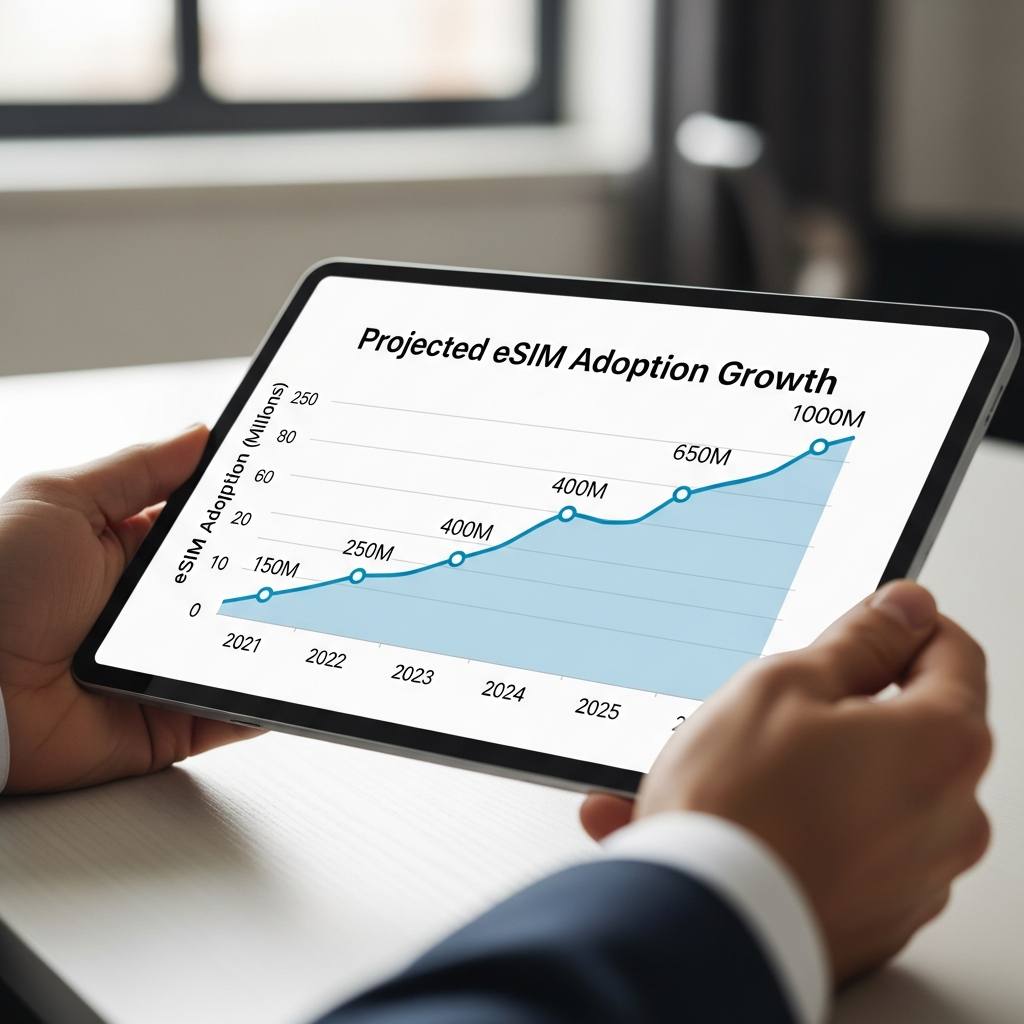
The adoption of this technology is accelerating at a breakneck pace, driven by consumer demand and manufacturer support. The ecosystem is rapidly maturing, moving from a niche feature in flagship phones to a standard expectation across mid-range devices, wearables, and laptops.
Recent data underscores this massive growth trajectory. According to Juniper Research, the global number of eSIMs installed in connected devices will increase from approximately 1.2 billion in 2021 to over 3.4 billion by 2025, representing a growth of 180%. Furthermore, GSMA Intelligence reports that by 2025, 60% of all smartphone unit sales are expected to be eSIM-compatible, signaling a tipping point where digital-only devices may soon become the norm.
Practical Guide to Switching to eSIM
For those ready to embrace this technology, the transition is smoother than many anticipate. However, it does require a basic understanding of how your specific device handles carrier profiles. Whether you are switching your main line or adding a secondary travel line, the process is generally managed through your phone’s settings menu rather than a physical interaction.
Here are three practical tips to ensure a smooth experience when adopting eSIM technology:
- Verify Carrier Locking Status: Before purchasing a third-party travel eSIM or attempting to switch carriers, ensure your device is “unlocked.” Many carriers lock phones bought on payment plans to their specific network. An eSIM from a different provider will not install successfully on a locked device. You can usually check this in the “About” section of your phone settings under “Carrier Lock” or “SIM Restrictions.”
- Label Your Lines Correctly: When you have multiple profiles installed (e.g., “Primary,” “Work,” “Japan Trip”), your phone will ask you to label them. Take the time to do this clearly. You must also designate which line is for voice/SMS and which is for cellular data. For travelers, the golden rule is: Primary line for Voice/SMS (roaming off), Travel eSIM for Data (roaming on).
- Save Your QR Codes: Most eSIMs are activated by scanning a QR code provided by the carrier. While the profile is digital, the activation key is crucial. If you accidentally delete the eSIM profile from your settings, you often cannot simply “undelete” it; you may need to scan the original QR code again or contact customer support for a new one. Keep screenshots or emails of these codes safe until the plan is expired.
The Future of Connection
As we look toward the future, the implications of eSIM extend far beyond mobile phones. This technology is the cornerstone of the Internet of Things (IoT). It enables smart cars to update firmware over the air anywhere in the world, allows smartwatches to stream music without a tethered phone, and permits logistics trackers to monitor global shipments seamlessly. The “always-on” capability is becoming a standard utility, much like electricity.
The telecommunications industry is often criticized for being slow to adapt, but the eSIM revolution proves that when technology solves real human friction, adoption is inevitable. We are moving toward a world where connectivity is invisible, instantaneous, and intelligent. The friction of the past is melting away, leaving us with pure connection.
As you consider your next device upgrade or your next international trip, reflect on the freedom that digital connectivity offers. It is more than just a tech spec; it is a tool for a borderless lifestyle. We invite you to stay curious, explore the settings on your own devices, and join the community of forward-thinkers who are embracing this wireless future.
Leave a Reply