
The landscape of telecommunications is undergoing a profound metamorphosis, driven by an unprecedented convergence of transformative technologies. Imagine a future where devices don’t just connect but truly understand, anticipate, and act with near-instantaneous responsiveness, pushing the boundaries of what’s possible. This future is not a distant dream but a rapidly unfolding reality, championed by the rise of the intelligent edge.
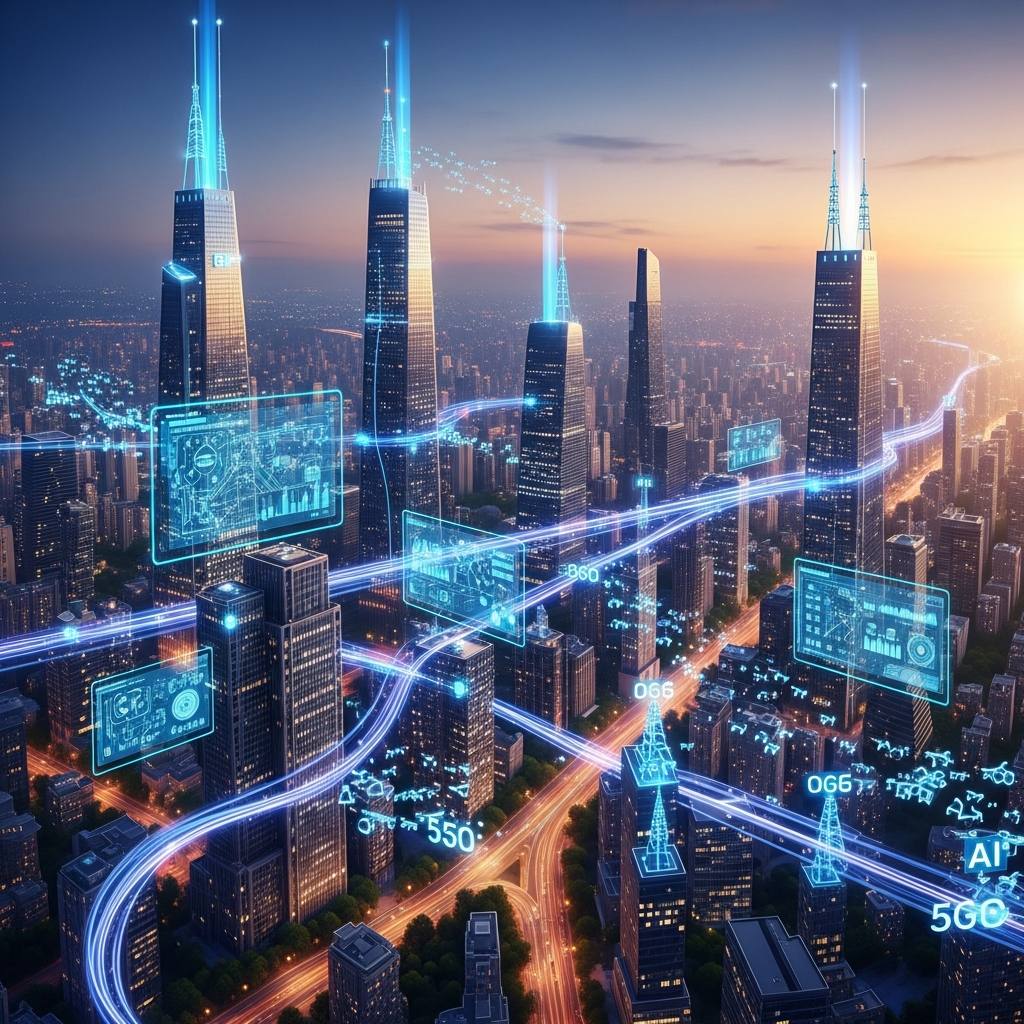
The Dawn of the Intelligent Edge
For decades, data processing largely resided in centralized cloud environments. While powerful, this model faces inherent limitations when dealing with the escalating demands of real-time applications and the sheer volume of data generated at the network’s periphery. The intelligent edge represents a paradigm shift, bringing computation and artificial intelligence closer to the data source – whether it’s a sensor in a factory, a smart city camera, or an autonomous vehicle.
This revolution is orchestrated by a powerful triumvirate: the ultra-fast connectivity of 5G, the analytical prowess of Artificial Intelligence (AI), and the pervasive sensing capabilities of the Internet of Things (IoT). Separately, each technology is a game-changer; together, they unlock a synergy that redefines telecommunications infrastructure and its potential.
Unpacking the Pillars: 5G, AI, and IoT in Synergy
The foundation of the intelligent edge rests upon these three interconnected pillars. Understanding their individual contributions and collective impact is crucial to grasping the magnitude of this technological shift.
5G’s Role: The High-Speed Highway. Fifth-generation wireless technology is far more than just faster internet; it’s a foundational shift in network architecture. 5G delivers ultra-low latency, often below 10 milliseconds, which is critical for real-time control systems and mission-critical applications. Its massive bandwidth supports the unprecedented data streams from billions of connected devices, while its capacity for massive machine-type communications (mMTC) allows millions of IoT devices to connect simultaneously within a small area. Crucially, 5G’s network slicing capabilities enable service providers to create virtual, customized networks tailored to specific applications, ensuring guaranteed performance for edge deployments.
AI’s Role: The Brain at the Edge. Artificial intelligence provides the intelligence layer for edge computing. Instead of sending all raw data to a central cloud for analysis, AI algorithms can be deployed directly on edge devices or local edge servers. This allows for immediate processing, pattern recognition, anomaly detection, and predictive analytics right where the data is generated. From optimizing energy consumption in smart buildings to enabling sophisticated computer vision for autonomous systems, AI at the edge transforms raw data into actionable insights instantaneously, reducing the reliance on constant cloud communication.
IoT’s Role: The Senses of the Network. The Internet of Things encompasses billions of connected devices, sensors, and actuators that collect and exchange data about their environment and operational status. These devices are the primary data generators for the intelligent edge. From industrial sensors monitoring machinery health to wearables tracking vital signs, IoT devices provide the eyes and ears for edge systems. The sheer volume and velocity of data generated by these devices necessitate processing closer to the source, preventing network congestion and enabling rapid responses.
The synergy is clear: 5G provides the robust, low-latency conduit; IoT provides the data and the points of action; and AI provides the intelligence to make sense of the data and initiate automated responses, all orchestrated at the network’s periphery.
Why Edge Computing Matters: Beyond Centralized Clouds
While cloud computing revolutionized data storage and processing, certain applications demand capabilities that central clouds struggle to deliver efficiently. Edge computing steps in to fill this gap, offering distinct advantages:
- Reduced Latency: By processing data closer to the source, the round-trip time to a distant data center is eliminated or significantly reduced. This is vital for real-time applications like autonomous driving, remote surgery, or industrial automation.
- Enhanced Security and Privacy: Processing sensitive data locally reduces its exposure during transit to a central cloud. It also helps meet data residency and compliance regulations by keeping data within specific geographical boundaries.
- Optimized Bandwidth Usage: Instead of transmitting all raw data to the cloud, edge devices can process and filter data, sending only aggregated insights or critical alerts. This significantly reduces bandwidth consumption and network strain.
- Increased Reliability: Edge systems can operate autonomously even during network outages to the central cloud, ensuring continuity for critical operations.
The global edge computing market is projected to reach over $155 billion by 2030, growing at a compound annual growth rate (CAGR) of 37.4% from 2023 to 2030, according to Grand View Research, highlighting its increasing adoption across various sectors.
Transforming Industries: Real-World Applications
The intelligent edge is not just a technological concept; it’s a practical enabler of unprecedented innovation across diverse industries.
- Smart Cities: Edge AI and 5G enable real-time traffic management, intelligent public safety systems with immediate threat detection, optimized waste collection, and smart utility grids that respond dynamically to demand. Cameras with edge AI can identify congestion or unusual activity, triggering immediate responses.
- Industry 4.0 and Manufacturing: In factories, edge computing facilitates predictive maintenance by analyzing sensor data from machinery in real-time, preventing costly downtime. Autonomous robots can collaborate and make immediate decisions on the factory floor, while AI-powered vision systems ensure quality control with unprecedented speed and accuracy.
- Healthcare: Remote patient monitoring systems leverage edge devices to collect and analyze vital signs, alerting medical professionals to anomalies instantly. AI at the edge can assist in diagnostics in remote clinics, and enable augmented reality for surgical training or assistance.
- Autonomous Vehicles: Self-driving cars require instantaneous decision-making based on vast amounts of sensor data. Edge computing allows these vehicles to process data locally, react to changing road conditions within milliseconds, and communicate effectively with other vehicles and infrastructure via 5G without relying on constant cloud connectivity.
Navigating the Challenges and Opportunities
While the intelligent edge offers immense promise, its implementation comes with its own set of challenges that require careful consideration.
Challenges: Securing a distributed network of edge devices presents a more complex cybersecurity landscape compared to centralized systems. Managing and orchestrating a vast number of diverse edge devices and applications requires sophisticated tools and expertise. Power consumption at the edge, especially for AI-intensive tasks, needs efficient solutions. Furthermore, ensuring interoperability between different vendors’ hardware and software components remains a key hurdle.
Opportunities: These challenges, however, also breed opportunities. The need for robust edge security creates new avenues for specialized solutions. The complexity of orchestration drives innovation in automated management platforms. The demand for efficient edge AI chips is pushing semiconductor advancements. Ultimately, the intelligent edge fosters entirely new business models, enhances operational efficiency, and delivers unparalleled user experiences across virtually every sector.
Practical Steps for Embracing the Intelligent Edge
For organizations looking to harness the power of the intelligent edge, a strategic and phased approach is often most effective:
- Assess Current Infrastructure: Begin by evaluating your existing network infrastructure, connectivity capabilities, and current data processing workflows. Identify areas where latency, bandwidth, or security are significant pain points that edge computing could address.
- Identify High-Impact Use Cases: Prioritize specific applications or processes where the benefits of real-time processing, local data analysis, or enhanced security at the edge would yield the greatest return on investment. Start small with pilot projects that demonstrate clear value.
- Invest in Skill Development: The intelligent edge demands a blend of expertise in networking (especially 5G), AI/machine learning, IoT device management, and cybersecurity. Foster internal talent or seek partnerships to bridge skill gaps.
- Consider Hybrid Architectures: Recognize that the intelligent edge will likely complement, rather than completely replace, cloud computing. Design a hybrid architecture that intelligently distributes workloads between the edge, private clouds, and public clouds based on specific requirements for each task.
The Future Trajectory: A More Autonomous and Responsive World
The journey of the intelligent edge is still in its nascent stages, yet its trajectory points towards an increasingly autonomous and responsive world. We can anticipate even deeper integration of AI and machine learning directly into silicon at the edge, leading to more powerful and energy-efficient edge devices. Network slicing will become even more granular, enabling bespoke connectivity for hyper-specific edge applications.
The proliferation of IoT devices continues unabated, with forecasts suggesting there will be over 29 billion connected IoT devices globally by 2030 (Statista), each potentially contributing to the intelligent edge ecosystem. This growth will drive further innovation in edge hardware, software, and services, making our digital and physical environments seamlessly integrated and more intelligent.
Shaping Tomorrow’s Digital Landscape
The intelligent edge, fueled by 5G, AI, and IoT, is fundamentally reshaping the telecommunications technology ecosystem. It’s moving us towards a future where intelligence is ubiquitous, where decisions are made at the speed of thought, and where every connected entity contributes to a more efficient, safer, and more innovative world. This convergence is not merely an upgrade; it’s a complete reimagining of how we interact with technology and how technology interacts with our environment.
As we stand on the cusp of this transformative era, it’s a moment for reflection and inspiration. The ingenuity that has brought us to this point will continue to drive us forward, demanding collaboration, foresight, and a willingness to embrace continuous learning. We invite you to be a part of this evolving narrative, to explore the boundless possibilities of the intelligent edge, and to contribute to shaping the connected future for generations to come. Together, we can build the networks and intelligent systems that power tomorrow’s world.
Leave a Reply