Blog

  • DGIS Inc Danny Gutierrez (Customer Spotlight)

    Bringing Clarity to a Complicated Process

    Auto insurance policies can be confusing.

    Registration requirements can feel frustrating.

    Deadlines, documentation, coverage limits, compliance rules — it’s easy to feel overwhelmed.

    DGIS approaches this differently.

    Instead of treating clients like transactions, Danny and his team focus on:

    • Clear explanations

    • Transparent coverage options

    • Personalized recommendations

    • Fast, reliable service

    Because when it comes to protecting your vehicle — whether personal or commercial — details matter.


    Serving Both Individuals and Business Owners

    DGIS Inc is known for supporting:

    • Personal auto insurance needs

    • Commercial vehicle coverage

    • Registration services

    • Policy adjustments and renewals

    For business owners especially, vehicle compliance isn’t optional.

    Fleet vehicles, service vans, and work trucks must be insured properly and registered accurately to avoid penalties, downtime, and financial exposure.

    DGIS helps streamline that process so owners can focus on running their business.


    Why Auto Insurance & Registration Still Matter in 2026

    With rising costs, increased traffic density, and evolving regulations, auto protection is more important than ever.

    Small oversights can result in:

    • Coverage gaps

    • Fines or registration delays

    • Increased liability exposure

    • Financial strain after accidents

    A knowledgeable advisor reduces that risk.

    Danny’s approach combines responsiveness with long-term client care — ensuring coverage evolves as needs change.


    A Business Built on Service & Relationships

    Like many entrepreneurs, Danny built DGIS through consistency and reputation.

    In service-based industries, success depends on:

    • Trust

    • Accuracy

    • Clear communication

    • Reliability

    Clients return — and refer others — because they know they’ll receive straightforward guidance and dependable support.

  • Cloud-Based Collaboration Is Now a Security Strategy

    Cloud-Based Collaboration Is Now a Security Strategy

    Cloud-Based Collaboration Is Now a Security Strategy

    For years, cloud tools were sold as a convenience upgrade.

    Work from anywhere.
    Share files instantly.
    Collaborate in real time.

    But in 2026, cloud-based collaboration isn’t just about productivity — it’s about security, resilience, and operational continuity.

    Small businesses that treat the cloud as a strategic security layer — not just a file storage solution — are protecting themselves in ways traditional on-premise systems never could.

    The Old Model: Files on Servers, Risk on Your Shoulders

    Traditional setups often included:

    • Local file servers
    • Desktop-installed software
    • Manual backups (if any)
    • Shared login credentials
    • Limited visibility into file access

    The problem?
    One hardware failure, ransomware attack, or lost device could bring everything to a halt.

    That model doesn’t work anymore.

    The Modern Model: Structured Cloud Environments

    Platforms like Microsoft 365 and Google Workspace now offer built-in security features that many small businesses underutilize:

    • Data encryption (at rest and in transit)
    • Multi-factor authentication (MFA)
    • Role-based access controls
    • Version history & file recovery
    • Admin activity monitoring
    • Secure sharing permissions
    • Automatic cloud backups

    When configured properly, these features transform your collaboration tools into a security framework.

    But here’s the key phrase:

    When configured properly.

    Collaboration Without Structure Creates Risk

    Simply “moving to the cloud” is not a security strategy.

    Common mistakes include:

    • Everyone has full admin access
    • Shared passwords across teams
    • Unrestricted file sharing links
    • No offboarding process when employees leave
    • No monitoring of suspicious login behavior

    The cloud doesn’t eliminate risk.
    It centralizes it — which can be a major advantage if managed correctly.

    Why Cloud Collaboration Increases Resilience

    Beyond security, structured cloud systems improve:

    1. Business Continuity

    If a laptop is lost or damaged:

    • Data isn’t lost
    • Access can be revoked immediately
    • Replacement devices sync instantly

    2. Remote Work Stability

    Secure access allows teams to:

    • Work from home
    • Operate from the field
    • Maintain continuity during disruptions

    3. Controlled Growth

    As teams expand:

    • Permissions can be layered
    • Departments can be segmented
    • Sensitive data can be isolated

    This prevents operational chaos as you scale.

    The Strategic Approach

    Small businesses should treat their cloud environment as:

    • A security perimeter
    • A collaboration hub
    • A backup system
    • An operational control center

    That means:

    • Setting permission hierarchies
    • Enforcing MFA across all users
    • Auditing shared links
    • Regularly reviewing admin privileges
    • Establishing documented access policies

    Cloud collaboration done correctly reduces risk and increases performance.

    Done casually, it creates hidden exposure.

    The Bottom Line

    Cloud tools are no longer just productivity upgrades.

    They are security infrastructure.

    If your cloud environment isn’t intentionally structured, monitored, and maintained — it’s time to treat it like the core system it actually is.

    Because modern business resilience starts in the cloud.

  • AI + Automation Is Reshaping Small Business – But Only If You Use It Correctly

    AI + Automation Is Reshaping Small Business – But Only If You Use It Correctly

    AI + Automation Is Reshaping Small Business — But Only If You Use It Correctly

    Every week there’s a new AI tool.
    A new automation platform.
    A new promise that “this will change your business.”

    But here’s the reality:

    Most small businesses don’t need more tools.
    They need better integration and smarter deployment.

    AI isn’t the advantage.
    Strategic implementation is.

    The Problem: Tool Overload

    Small businesses are signing up for:

    • AI writing tools
    • Automation platforms
    • CRM add-ons
    • Chatbots
    • Call transcription software
    • Marketing automation tools

    But very few are asking the most important question:

    How does this connect to my existing workflow?

    Without integration, AI becomes just another app tab.

    Where AI Actually Delivers Value

    The businesses seeing real gains are using AI in very specific areas:

    1. Call Intelligence & Documentation

    Instead of relying on memory or handwritten notes, AI-powered call transcription and summarization:

    • Reduces follow-up mistakes
    • Improves sales tracking
    • Protects against miscommunication
    • Creates searchable call records

    When integrated into your phone system and CRM, this becomes a productivity multiplier.

    2. CRM Automation That Drives Revenue

    AI inside CRM systems can:

    • Identify hot leads faster
    • Suggest follow-up timing
    • Draft outreach messages
    • Track pipeline activity

    But only when:

    • Calls are logged automatically
    • Text messages sync
    • Sales workflows are structured

    AI amplifies structure. It doesn’t replace it.

    3. Customer Responsiveness

    Small businesses win on responsiveness.

    AI + automation can:

    • Route calls intelligently
    • Auto-respond to inquiries
    • Send appointment confirmations
    • Trigger follow-up messages

    The result? Faster response times without hiring additional staff.

    What Most Small Businesses Get Wrong

    They chase features instead of outcomes.

    They:

    • Add AI without defining the goal
    • Buy automation without mapping the process
    • Expect software to fix operational gaps

    Technology cannot compensate for lack of structure.

    It can, however, scale what already works.

    The Smart Stack Approach

    Instead of stacking disconnected tools, consider this approach:

    1. Start with communication foundation
      • Business phone system
      • SMS capability
      • Call routing structure
    2. Integrate with CRM
      • Automatic call logging
      • Contact syncing
      • Sales pipeline tracking
    3. Layer AI strategically
      • Call transcription
      • Sales insight summaries
      • Follow-up reminders
      • Smart routing
    4. Automate repetitive tasks
      • Appointment confirmations
      • Lead assignments
      • Task reminders

    Now AI isn’t random.
    It’s embedded into revenue-driving workflows.

    Why This Matters in 2026

    Small businesses are competing with:

    • Larger firms
    • Faster marketing cycles
    • Shorter customer attention spans
    • Higher customer expectations

    The businesses that survive and grow are not the ones with the most software.

    They are the ones with:

    • Clear systems
    • Integrated tools
    • Fast response times
    • Documented workflows
    • Data-informed decisions

    The Bottom Line

    AI is not magic.
    Automation is not strategy.

    But when integrated correctly into your communication systems, CRM, and operational workflows — they become powerful leverage.

    If you’re going to adopt AI this year, don’t start with hype.

    Start with your foundation.

    Then build from there.

  • 5 Ways to Improve WiFi in Your Small Office (Without Being a Tech Expert)

    5 Ways to Improve WiFi in Your Small Office (Without Being a Tech Expert)


    If your WiFi feels slow, unreliable, or “randomly bad,” you’re not alone.

    Many small business owners struggle with office WiFi — especially if they aren’t technical. Calls drop. Video meetings freeze. File uploads stall. Staff gets frustrated. Productivity suffers.

    The good news? Most WiFi problems in small offices are fixable without rebuilding your entire network.

    Here are five practical ways to improve your small business WiFi.


    1️⃣ Stop Using the ISP’s Default Router (If You Still Are)

    One of the biggest issues we see: businesses relying entirely on the basic router provided by their internet service provider.

    Those devices are typically:

    • Designed for light residential use
    • Limited in coverage
    • Not optimized for multiple users
    • Lacking advanced traffic management

    If you have:

    • 5+ employees
    • Cloud-based software
    • VoIP phones
    • Video meetings

    You likely need a business-grade router and access point, not a consumer combo device.

    Upgrading this one piece of equipment can dramatically improve stability and speed.


    2️⃣ Move Your Router — Location Matters More Than You Think

    WiFi signals weaken through:

    • Concrete walls
    • Metal shelving
    • Filing cabinets
    • Elevators
    • Large appliances

    If your router is:

    • Hidden in a closet
    • Under a desk
    • Behind a server rack
    • In the far corner of the office

    Your signal is already compromised.

    Best practice:

    • Place your main access point centrally
    • Elevate it (not on the floor)
    • Keep it away from thick walls or metal objects

    Physical placement alone can solve many coverage issues.


    3️⃣ Separate Guest WiFi from Business WiFi

    If customers, vendors, or personal devices are using the same network as:

    • VoIP phones
    • POS systems
    • Accounting software
    • CRM platforms

    You’re asking for congestion problems.

    A properly configured network should include:

    • A secure internal business network
    • A separate guest network
    • Bandwidth controls if needed

    This keeps your critical systems stable and protects sensitive data.


    4️⃣ Add Access Points — Don’t Just “Boost” the Signal

    WiFi extenders often create more problems than they solve.

    Instead of boosting one signal, consider installing:

    • Multiple access points
    • Wired backhaul (if possible)
    • A properly designed mesh system

    In offices larger than 1,500–2,000 sq ft, one router is rarely enough.

    More access points = better coverage + smoother device handoff + fewer dead zones.


    5️⃣ Optimize for VoIP and Video Traffic

    If your business relies on:

    • Hosted VoIP phone systems
    • Zoom or video meetings
    • Cloud platforms
    • AI-based tools

    Your network should prioritize voice and video traffic.

    This is called QoS (Quality of Service) configuration.

    Without it, someone downloading large files can cause:

    • Choppy calls
    • Dropped audio
    • Lag during meetings

    A properly configured router ensures business-critical traffic gets priority.


    Bonus Tip: Know When to Call a Professional

    Many small businesses spend years troubleshooting WiFi issues themselves.

    Sometimes the fastest solution is:

    • A proper network assessment
    • Professional configuration
    • Business-grade hardware

    Reliable connectivity isn’t a luxury anymore — it’s infrastructure.

    When your internet is stable:

    • Calls are clearer
    • Teams move faster
    • Customers get better service
    • Technology works the way it’s supposed to

    And that changes everything.

  • NEVTIS Plus — The Mobile VoIP App Built for Real Business

    NEVTIS Plus — The Mobile VoIP App Built for Real Business

    If you run a small business, you already know the truth: your phone is your front door.
    Missed calls = missed revenue. Slow follow-ups = lost trust. And a “basic” phone app doesn’t cut it when your team is moving fast.

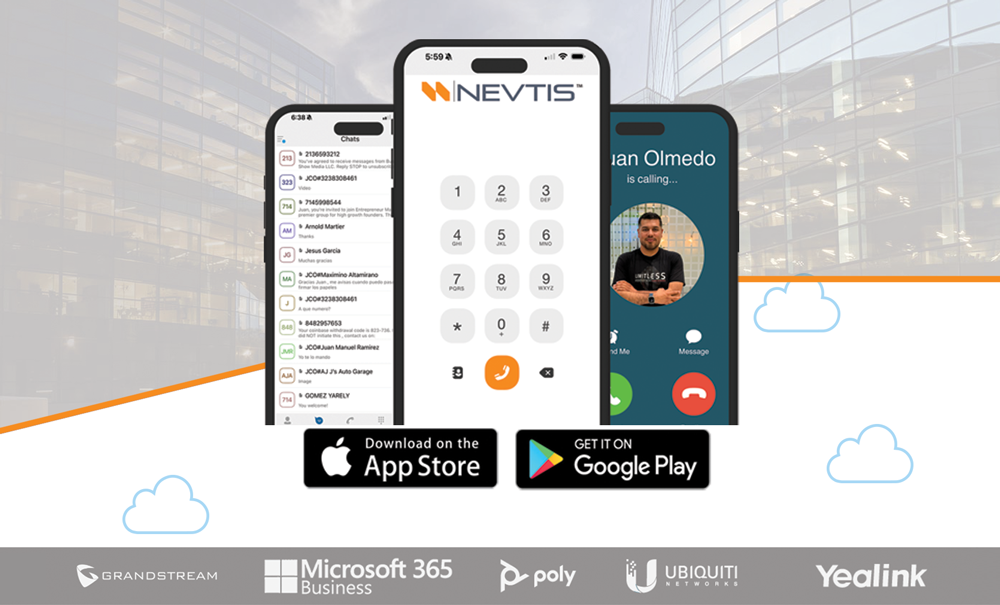
    That’s why this week’s Tool Spotlight is NEVTIS Plus — our hosted VoIP business phone system mobile app for iOS and Android — and after pushing it hard in real-world use, we’re giving it a 10/10.

    Our score: 10/10 (Stress-Tested)

    We didn’t just “try it.” We stress-tested it the way actual businesses operate:

    • multiple calls back-to-back
    • moving between office and field
    • transferring calls mid-conversation
    • texting customers while calls are active
    • reviewing call notes and summaries after the fact
    • using it alongside CRM workflows

    The result: reliable performance, clear audio, and workflows that make you faster.


    What NEVTIS Plus does best

    1) A complete business phone system — on your smartphone

    NEVTIS Plus isn’t a “call app.” It’s your full phone system in your pocket:

    • Answer calls professionally from anywhere
    • Transfer calls to teammates or departments (without chaos)
    • Call Park for managing active calls and picking them up across devices
    • Music on-hold so callers stay engaged instead of hanging up
    • Unlimited nationwide calling and texting (built for day-to-day business volume)

    2) AI call transcribing + summarizing

    One of the biggest productivity boosts is the AI call transcription and summarization.
    Instead of relying on memory or scribbled notes, you can review:

    • what the customer asked for
    • what commitments were made
    • what the next steps are

    This is a game-changer for:

    • sales teams tracking objections and follow-ups
    • service teams documenting work requests
    • owners who want clarity without replaying recordings

    3) Business SMS texting that customers actually respond to

    Texting is often the fastest way to get an answer. NEVTIS Plus supports Business SMS so your team can:

    • confirm appointments
    • send quick updates
    • follow up on quotes
    • keep conversations in one place

    It’s professional, trackable, and massively improves response times.

    4) Video meeting integration for a “one platform” workflow

    When a call needs to become a meeting, NEVTIS Plus supports video meet integration, making it easy to move from “quick call” to “face-to-face” without switching tools.

    5) CRM integrations that connect the phone to the pipeline

    This is where small businesses start to operate like enterprise teams.

    NEVTIS Plus supports CRM and business integrations with platforms including:

    • Zoho CRM
    • VTiger
    • Zendesk
    • GoHighLevel
    • HubSpot
    • Salesforce
    • QuickBooks
    • Pipedrive
    • …and more

    The takeaway: your phone system becomes part of your process, not a separate tool. Calls, texts, follow-ups, and customer workflows stay connected.


    Who NEVTIS Plus is perfect for

    NEVTIS Plus is a strong fit if you’re:

    • a small business owner handling calls on the go
    • a sales team that needs speed + professionalism
    • a service business with technicians in the field
    • a company that wants to unify calls, texting, and customer workflows
    • an office that wants enterprise features without enterprise complexity

    If your business lives and dies by responsiveness, this is the tool.


    Our verdict

    NEVTIS Plus delivers what most “business phone apps” promise but rarely execute:

    • reliable call handling
    • professional call management features
    • texting that keeps customers engaged
    • AI support that saves time
    • integrations that make you more organized
    • the ability to scale as your team grows

    Score: 10/10
    If you want a mobile-first business phone system that makes your team faster, sharper, and more consistent — NEVTIS Plus is it.


    Want to see NEVTIS Plus in action?

    If you’re interested in a live walkthrough, a feature checklist, or help connecting your CRM integrations, reach out and we’ll show you how NEVTIS Plus fits your business workflows. Schedule a Demo Today!

  • Pure Logic Escrow Inc: Independent. Integrity-Driven. Built on Service.

    Pure Logic Escrow Inc: Independent. Integrity-Driven. Built on Service.

    In real estate, trust isn’t a slogan — it’s the foundation of every transaction.

    Pure Logic Escrow Inc has built a reputation around one simple idea: deliver an escrow experience defined by uncompromising integrity and unparalleled customer service, from start to finish. (purelogic) Rather than measuring success by the number of years in business or transactions closed, their team measures it by something that matters more: client satisfaction — every time. (purelogic)

    Fiercely independent — so clients come first

    Pure Logic Escrow is proudly independent: they are not owned by a real estate company or title insurance company. (purelogic) That independence is intentional — it allows them to remain an impartial third party, representing the best interests of everyone involved in the transaction. (purelogic) In a world where affiliations can create pressure, Pure Logic Escrow’s model reinforces what buyers, sellers, agents, and partners value most: clarity, fairness, and confidence.

    Licensed, regulated, and committed to quality

    Pure Logic Escrow is licensed and regulated by the Department of Financial Protection & Innovation (License 963-2692). (purelogic) That commitment to accountability aligns perfectly with how they operate day-to-day: consistent, dependable service people can count on — transaction after transaction. (purelogic)

    A decade of partnership with NEVTIS

    At NEVTIS, we’re proud to support Pure Logic Escrow Inc as a customer for over 10 years, providing Hosted VoIP business phone services and IT/MSP solutions designed to keep teams responsive, reliable, and secure.

    In escrow, speed matters. Responsiveness matters. And client experience matters. The right communications and IT foundation helps ensure that clients are served quickly, professionally, and consistently — which is exactly the standard Pure Logic Escrow is known for.

    Why we’re spotlighting Pure Logic Escrow

    Because their story is a reminder that doing things the right way still wins.

    • Prioritize people over volume. (purelogic)
    • Protect independence to protect integrity. (purelogic)
    • Build long-term trust through consistent service. (purelogic)

    That’s leadership — and that’s a business worth celebrating.

    Learn more about Pure Logic Escrow Inc: (purelogic)

  • The Intelligent Edge: Powering the Next Wave of Telecommunications Transformation

    The Intelligent Edge: Powering the Next Wave of Telecommunications Transformation

    The landscape of telecommunications is undergoing a profound metamorphosis, driven by an unprecedented convergence of transformative technologies. Imagine a future where devices don’t just connect but truly understand, anticipate, and act with near-instantaneous responsiveness, pushing the boundaries of what’s possible. This future is not a distant dream but a rapidly unfolding reality, championed by the rise of the intelligent edge.

    Futuristic city with data flowing between interconnected devices, 5G towers, AI interfaces, and IoT sensors, representing the intelligent edge in telecommunications transformation. Emphasize connectivity and smart technology.

    The Dawn of the Intelligent Edge

    For decades, data processing largely resided in centralized cloud environments. While powerful, this model faces inherent limitations when dealing with the escalating demands of real-time applications and the sheer volume of data generated at the network’s periphery. The intelligent edge represents a paradigm shift, bringing computation and artificial intelligence closer to the data source – whether it’s a sensor in a factory, a smart city camera, or an autonomous vehicle.

    This revolution is orchestrated by a powerful triumvirate: the ultra-fast connectivity of 5G, the analytical prowess of Artificial Intelligence (AI), and the pervasive sensing capabilities of the Internet of Things (IoT). Separately, each technology is a game-changer; together, they unlock a synergy that redefines telecommunications infrastructure and its potential.

    Unpacking the Pillars: 5G, AI, and IoT in Synergy

    The foundation of the intelligent edge rests upon these three interconnected pillars. Understanding their individual contributions and collective impact is crucial to grasping the magnitude of this technological shift.

    5G’s Role: The High-Speed Highway. Fifth-generation wireless technology is far more than just faster internet; it’s a foundational shift in network architecture. 5G delivers ultra-low latency, often below 10 milliseconds, which is critical for real-time control systems and mission-critical applications. Its massive bandwidth supports the unprecedented data streams from billions of connected devices, while its capacity for massive machine-type communications (mMTC) allows millions of IoT devices to connect simultaneously within a small area. Crucially, 5G’s network slicing capabilities enable service providers to create virtual, customized networks tailored to specific applications, ensuring guaranteed performance for edge deployments.

    AI’s Role: The Brain at the Edge. Artificial intelligence provides the intelligence layer for edge computing. Instead of sending all raw data to a central cloud for analysis, AI algorithms can be deployed directly on edge devices or local edge servers. This allows for immediate processing, pattern recognition, anomaly detection, and predictive analytics right where the data is generated. From optimizing energy consumption in smart buildings to enabling sophisticated computer vision for autonomous systems, AI at the edge transforms raw data into actionable insights instantaneously, reducing the reliance on constant cloud communication.

    IoT’s Role: The Senses of the Network. The Internet of Things encompasses billions of connected devices, sensors, and actuators that collect and exchange data about their environment and operational status. These devices are the primary data generators for the intelligent edge. From industrial sensors monitoring machinery health to wearables tracking vital signs, IoT devices provide the eyes and ears for edge systems. The sheer volume and velocity of data generated by these devices necessitate processing closer to the source, preventing network congestion and enabling rapid responses.

    The synergy is clear: 5G provides the robust, low-latency conduit; IoT provides the data and the points of action; and AI provides the intelligence to make sense of the data and initiate automated responses, all orchestrated at the network’s periphery.

    Why Edge Computing Matters: Beyond Centralized Clouds

    While cloud computing revolutionized data storage and processing, certain applications demand capabilities that central clouds struggle to deliver efficiently. Edge computing steps in to fill this gap, offering distinct advantages:

    • Reduced Latency: By processing data closer to the source, the round-trip time to a distant data center is eliminated or significantly reduced. This is vital for real-time applications like autonomous driving, remote surgery, or industrial automation.
    • Enhanced Security and Privacy: Processing sensitive data locally reduces its exposure during transit to a central cloud. It also helps meet data residency and compliance regulations by keeping data within specific geographical boundaries.
    • Optimized Bandwidth Usage: Instead of transmitting all raw data to the cloud, edge devices can process and filter data, sending only aggregated insights or critical alerts. This significantly reduces bandwidth consumption and network strain.
    • Increased Reliability: Edge systems can operate autonomously even during network outages to the central cloud, ensuring continuity for critical operations.

    The global edge computing market is projected to reach over $155 billion by 2030, growing at a compound annual growth rate (CAGR) of 37.4% from 2023 to 2030, according to Grand View Research, highlighting its increasing adoption across various sectors.

    Transforming Industries: Real-World Applications

    The intelligent edge is not just a technological concept; it’s a practical enabler of unprecedented innovation across diverse industries.

    • Smart Cities: Edge AI and 5G enable real-time traffic management, intelligent public safety systems with immediate threat detection, optimized waste collection, and smart utility grids that respond dynamically to demand. Cameras with edge AI can identify congestion or unusual activity, triggering immediate responses.
    • Industry 4.0 and Manufacturing: In factories, edge computing facilitates predictive maintenance by analyzing sensor data from machinery in real-time, preventing costly downtime. Autonomous robots can collaborate and make immediate decisions on the factory floor, while AI-powered vision systems ensure quality control with unprecedented speed and accuracy.
    • Healthcare: Remote patient monitoring systems leverage edge devices to collect and analyze vital signs, alerting medical professionals to anomalies instantly. AI at the edge can assist in diagnostics in remote clinics, and enable augmented reality for surgical training or assistance.
    • Autonomous Vehicles: Self-driving cars require instantaneous decision-making based on vast amounts of sensor data. Edge computing allows these vehicles to process data locally, react to changing road conditions within milliseconds, and communicate effectively with other vehicles and infrastructure via 5G without relying on constant cloud connectivity.

    Navigating the Challenges and Opportunities

    While the intelligent edge offers immense promise, its implementation comes with its own set of challenges that require careful consideration.

    Challenges: Securing a distributed network of edge devices presents a more complex cybersecurity landscape compared to centralized systems. Managing and orchestrating a vast number of diverse edge devices and applications requires sophisticated tools and expertise. Power consumption at the edge, especially for AI-intensive tasks, needs efficient solutions. Furthermore, ensuring interoperability between different vendors’ hardware and software components remains a key hurdle.

    Opportunities: These challenges, however, also breed opportunities. The need for robust edge security creates new avenues for specialized solutions. The complexity of orchestration drives innovation in automated management platforms. The demand for efficient edge AI chips is pushing semiconductor advancements. Ultimately, the intelligent edge fosters entirely new business models, enhances operational efficiency, and delivers unparalleled user experiences across virtually every sector.

    Practical Steps for Embracing the Intelligent Edge

    For organizations looking to harness the power of the intelligent edge, a strategic and phased approach is often most effective:

    • Assess Current Infrastructure: Begin by evaluating your existing network infrastructure, connectivity capabilities, and current data processing workflows. Identify areas where latency, bandwidth, or security are significant pain points that edge computing could address.
    • Identify High-Impact Use Cases: Prioritize specific applications or processes where the benefits of real-time processing, local data analysis, or enhanced security at the edge would yield the greatest return on investment. Start small with pilot projects that demonstrate clear value.
    • Invest in Skill Development: The intelligent edge demands a blend of expertise in networking (especially 5G), AI/machine learning, IoT device management, and cybersecurity. Foster internal talent or seek partnerships to bridge skill gaps.
    • Consider Hybrid Architectures: Recognize that the intelligent edge will likely complement, rather than completely replace, cloud computing. Design a hybrid architecture that intelligently distributes workloads between the edge, private clouds, and public clouds based on specific requirements for each task.

    The Future Trajectory: A More Autonomous and Responsive World

    The journey of the intelligent edge is still in its nascent stages, yet its trajectory points towards an increasingly autonomous and responsive world. We can anticipate even deeper integration of AI and machine learning directly into silicon at the edge, leading to more powerful and energy-efficient edge devices. Network slicing will become even more granular, enabling bespoke connectivity for hyper-specific edge applications.

    The proliferation of IoT devices continues unabated, with forecasts suggesting there will be over 29 billion connected IoT devices globally by 2030 (Statista), each potentially contributing to the intelligent edge ecosystem. This growth will drive further innovation in edge hardware, software, and services, making our digital and physical environments seamlessly integrated and more intelligent.

    Shaping Tomorrow’s Digital Landscape

    The intelligent edge, fueled by 5G, AI, and IoT, is fundamentally reshaping the telecommunications technology ecosystem. It’s moving us towards a future where intelligence is ubiquitous, where decisions are made at the speed of thought, and where every connected entity contributes to a more efficient, safer, and more innovative world. This convergence is not merely an upgrade; it’s a complete reimagining of how we interact with technology and how technology interacts with our environment.

    As we stand on the cusp of this transformative era, it’s a moment for reflection and inspiration. The ingenuity that has brought us to this point will continue to drive us forward, demanding collaboration, foresight, and a willingness to embrace continuous learning. We invite you to be a part of this evolving narrative, to explore the boundless possibilities of the intelligent edge, and to contribute to shaping the connected future for generations to come. Together, we can build the networks and intelligent systems that power tomorrow’s world.


  • Starlink’s Direct-to-Cell Revolution: Satellite Internet on Your Phone, No Strings Attached

    Starlink’s Direct-to-Cell Revolution: Satellite Internet on Your Phone, No Strings Attached

    Starlink’s mobile satellite internet service transforms connectivity by beaming signals directly to unmodified smartphones, eliminating the need for dishes, apps, or hardware upgrades. This Direct-to-Cell (D2C) technology promises lifeline access in remote areas, disaster zones, and coverage dead spots worldwide. As partnerships with carriers like T-Mobile roll out, it signals a shift from fixed broadband to ubiquitous mobile coverage.

    How Direct-to-Cell Works

    Satellites equipped with cellular modems orbit as space-based cell towers, linking to standard LTE and 5G phones with a clear sky view. Users experience seamless handoffs from ground networks—no manual switching or special equipment required. Initial focus lands on essentials like SMS, MMS, 911 calls, and location sharing, with voice and data capabilities scaling up as satellite density grows.​

    This builds on Starlink’s low-Earth orbit constellation, now exceeding thousands of satellites, to minimize latency compared to traditional geostationary options. Phones from the past four years generally support it, auto-connecting outdoors where terrestrial signals fade. Indoor use remains limited, prioritizing open-sky scenarios like hiking trails or rural drives.

    Rollout Milestones and Partnerships

    T-Mobile’s beta launched early 2025, amassing 1.8 million users and over a million messages before the full US debut in July 2025. Pricing integrates into existing plans: free for premium tiers ($17+ monthly per multi-line), or $10/month add-on, extending to AT&T and Verizon customers too.

    Global expansion accelerates with carriers like Australia’s Optus and Japan’s KDDI testing integrations, targeting underserved regions. SpaceX plans third-generation satellites by mid-2026, boasting 1Tbps downlink capacity per bird to boost speeds and reliability. Recent updates highlight 2 million active US customers achieving near-200Mbps median downloads during peaks, underscoring network maturity.

    Real-World Capabilities and Limitations

    For everyday users, D2C excels in basics: reliable texting during blackouts, SOS alerts for emergencies, and navigation in off-grid spots. Early adopters report success in rural America, maritime voyages, and wildfire evacuations—scenarios where ground infrastructure fails. Data throughput starts modest, akin to 2G/3G edges, but evolves toward broadband as more satellites launch and beamforming tech refines signals.

    Challenges persist: signals weaken under tree cover or buildings, and high-speed data demands clear horizons. It’s not a home internet rival but a gap-filler for mobiles, complementing Starlink’s dish-based residential service. Battery drain stays minimal since phones treat it like any carrier handover.

    Broader Impacts on Connectivity and Society

    This launch erodes digital divides, empowering remote workers, adventurers, and disaster responders with always-on access. In the US, it bolsters rural economies by enabling telemedicine, online education, and e-commerce without fixed lines. Globally, it aids developing nations leapfrogging infrastructure hurdles.

    Economically, Starlink fuels SpaceX growth, with analysts eyeing direct-to-device as a multi-billion revenue stream by 2027. Rivals like Apple’s emergency satellite feature or AST SpaceMobile chase similar tech, spurring competition. Environmentally, denser satellite fleets raise light pollution concerns, though SpaceX mitigates with anti-reflective coatings.

    Future Roadmap and What to Watch

    By late 2026, expect voice calls and streaming-viable data as V3 satellites deploy via Starship reusables, slashing costs. Starlink explores a “Starlink Phone” for optimized integration, though unmodified devices remain the focus. Regulatory nods in Europe and Asia pave international scaling, potentially covering 100% of oceans and poles.

    For users, monitor carrier announcements—beta waitlists fill fast. Test it on your next road trip: step outside, and your phone might just connect from space. Starlink’s D2C doesn’t just launch a service; it redefines mobility in a connected world

  • Beyond the Cell Tower: How Direct-to-Device Satellite Connectivity is Redefining Global Communication

    Beyond the Cell Tower: How Direct-to-Device Satellite Connectivity is Redefining Global Communication

    Imagine standing in the most remote corner of a vast mountain range, staring at a screen that displays zero bars of signal, yet successfully sending a message that reaches your family instantly. This scenario, once reserved for those carrying bulky and expensive specialized hardware, is rapidly becoming the new standard for consumer smartphones. As the telecommunications industry pivots toward the sky, the convergence of terrestrial mobile networks and non-terrestrial networks (NTN) marks one of the most profound shifts in connectivity history.


    The Dawn of the Sky-High Network

    For decades, the fundamental limitation of mobile technology has been geography. Cell towers require power, land, and fiber backhaul, making them economically unfeasible in sparsely populated areas, oceans, and rugged terrains. Consequently, a significant portion of the Earth’s surface has remained a digital dead zone. However, the latest trend in telecommunications technology—Direct-to-Device (D2D) satellite connectivity—is dismantling these physical barriers. By allowing standard smartphones to communicate directly with Low Earth Orbit (LEO) satellites, the industry is effectively turning the sky into the ultimate cell tower.


    This technology operates differently from the legacy satellite phones of the past, which relied on high-orbit Geostationary (GEO) satellites. Those older systems required large antennas and had significant latency. The current revolution utilizes LEO constellations, which orbit much closer to Earth (often between 500 and 2,000 kilometers). This proximity reduces signal lag and allows the compact antennas already inside modern smartphones to establish a link, provided there is a clear view of the sky. It is a seamless integration of hardware and software that promises ubiquitous coverage.


    A smartphone in a remote mountain landscape, connected to a satellite

    Understanding the Technology: 5G NTN

    At the heart of this transformation is the 3GPP Release 17 standard, which officially introduced Non-Terrestrial Networks (NTN) into the 5G ecosystem. This standardization is crucial because it moves the industry away from proprietary, walled-garden solutions toward a unified framework where any compliant device can roam onto satellite networks. This works much like international roaming does today, but instead of switching from AT&T to Vodafone, your phone switches from a terrestrial tower to a satellite passing overhead.


    The technical implications are vast. Mobile Network Operators (MNOs) are now partnering with satellite providers to extend their coverage maps instantly. For the end-user, this means that the concept of “out of service” is slowly becoming obsolete. Initially starting with emergency SOS features, the roadmap for this technology is rapidly expanding to include two-way SMS, messaging apps, and eventually, voice and low-bandwidth data services.


    The Global Impact and Market Reality

    The drive for satellite integration is not merely a luxury for adventure travelers; it is a necessity for bridging the digital divide. According to recent data from the GSMA, while mobile broadband coverage is extensive, approximately 5% of the global population still lives in areas not covered by a mobile broadband network. While this percentage seems small, it represents hundreds of millions of people, primarily in rural and developing regions, who are entirely cut off from the digital economy.


    Furthermore, the economic incentive for this technological leap is undeniable. A report by ABI Research projects that the satellite-to-mobile market could reach 6.8 million monthly active users by 2027, indicating a massive consumer appetite for guaranteed connectivity. This growth trajectory suggests that satellite capability will soon be a standard feature in flagship and mid-range devices, rather than a niche selling point.


    Practical Applications Beyond Emergencies

    While the marketing for D2D connectivity often focuses on dramatic rescue stories, the practical applications are far broader. For logistics and supply chain management, this technology ensures that assets moving across oceans or deserts are always trackable. For the agricultural sector, IoT sensors in remote fields can transmit data regarding soil moisture and crop health without the need for expensive local infrastructure.


    In the realm of personal use, this shift changes how we plan travel and remote work. Digital nomads, who were previously tethered to locations with reliable Wi-Fi or 4G, can now venture further off the grid while maintaining a lifeline to their clients and teams. It democratizes the freedom of movement, ensuring that safety and communication are not compromised by the desire for exploration.


    Navigating the Transition: Practical Tips

    As we transition into this new era of hybrid connectivity, users must understand how to optimize their devices for satellite communication. Unlike cellular signals which can penetrate glass and thin walls, satellite connections are more fragile and demand specific conditions. Here are three practical tips to ensure you are ready to utilize this technology:


      • Prioritize Line of Sight: Satellite signals operate on high frequencies that are easily blocked by obstructions. If you need to connect, move to an open area away from tall buildings, dense tree canopies, or deep canyons. Your phone needs to “see” the satellite to talk to it.


      • Manage Battery Consumption: Searching for a satellite signal consumes significantly more power than connecting to a nearby cell tower. If you are in a dead zone, turn off the satellite search feature until you actually need to send a message to preserve your battery life for emergencies.


    • Update Firmware Regularly: Because this technology is in its infancy, manufacturers are frequently releasing updates to improve connection stability and satellite handover protocols. ensuring your device is running the latest software is critical for functionality.


    Reflecting on a Connected Future

    The integration of satellite technology into our mobile devices serves as a powerful reminder of human ingenuity. We are no longer limited by the infrastructure we can build on the ground; we are looking upward to solve the problems of the earth. This technological evolution forces us to reflect on what it means to be truly connected. It offers a safety net for the adventurous and a bridge for the isolated.


    However, with this ubiquity comes the responsibility of balance. Just because we can be reached anywhere, does not always mean we should be. As we embrace this era of total connectivity, we must also learn the art of intentional disconnection, using these tools to enhance our lives rather than dictate them.


    Join the Conversation

    The future of telecommunications is being written right now, and it is happening in the orbit above us. As this technology becomes accessible to the mainstream, it will undoubtedly shape how we work, travel, and stay safe. We invite you to stay curious, keep exploring the boundaries of technology, and become part of this growing community of tech enthusiasts who are watching the skies for the next big breakthrough.

  • Microsoft Azure Outage: Why Businesses Crashed and Why Calm Prevails Now

    Microsoft Azure Outage: Why Businesses Crashed and Why Calm Prevails Now

    A widespread Microsoft Azure outage hit on January 22, 2026, knocking out services globally for over nine hours and paralyzing business operations. Routine North American maintenance spiraled into capacity overloads, disrupting Microsoft 365, Outlook, Teams, and Azure-dependent platforms. Full recovery arrived swiftly, restoring normalcy by early January 23 with no lingering disruptions.

    Detailed Timeline of the Disruption

    The outage kicked off around 11:40 a.m. PST (2:40 p.m. EST), with user reports flooding in about connectivity timeouts and service errors. Azure’s North American servers buckled under elevated traffic, possibly exacerbated by third-party networking glitches, creating widespread imbalances. By late afternoon EST, Microsoft 365 apps like Outlook saw email failures, Teams chats stalled, and tools such as Copilot, Defender, and Purview became unresponsive.

    Recovery efforts ramped up unevenly into the evening. Microsoft applied load balancing fixes and traffic rerouting, but full restoration dragged until about 1:30 a.m. EST on January 23. This came just a day after a separate Microsoft 365 hiccup on January 21, underscoring recurring pressures on the infrastructure. No major data loss surfaced, but the nine-hour span tested contingency plans everywhere from enterprises to remote workers.

    Services Hit Hardest and Real-World Fallout

    Azure’s core faced the brunt, with portal access, API calls, and storage operations grinding to halts. Microsoft 365 users grappled with Outlook send/receive blocks, Teams meeting drops, and admin center lockouts. Security tools like Defender lagged, while consumer-facing services including the Microsoft Store flickered intermittently.

    Globally, impacts rippled from US enterprises to users in Europe, Asia, and Latin America—including Colombia—where time zone overlaps amplified frustration during peak hours. Developers paused deployments, e-commerce sites faltered, and hybrid work setups crumbled, costing productivity estimated in millions. The event echoed past Azure incidents, like those in 2025, reminding everyone of single points of failure in cloud ecosystems.

    Root Causes and Microsoft’s Response

    At its core, a maintenance-induced load spike overwhelmed server capacity, leading to cascading failures in traffic processing. While Microsoft pinned it on internal infrastructure without naming culprits like BGP routing or DDoS, the lack of an early ETA drew criticism for slow communication. Teams worked through the night on mitigations, eventually stabilizing services without long-term damage.

    This outage fits a pattern: Azure’s growth strains its backbone, especially post-2025 expansions in AI workloads and edge computing. Microsoft promised post-mortems and updates via their status page, but users crave deeper transparency on redundancies.

    Lessons for Businesses and Users

    Cloud reliance demands backups. The outage exposed gaps in multi-region setups—many stuck to single Azure zones, amplifying downtime. Hybrid clouds with AWS or Google Cloud proved more resilient, as did offline-first apps. Enterprises should audit SLAs; Azure’s 99.99% uptime pledge bent but didn’t fully break here.

    For developers, caching strategies and API retries mitigated some pain, yet full outages test even robust code. Small businesses, hit hardest without IT armies, learned the value of diversified tools over all-in Azure bets.

    Call to Action: Build Your Resilience Now

    Don’t wait for the next outage—secure your operations today. Audit your Azure dependencies with Microsoft’s status dashboard at azure.status.microsoft and enable multi-region failover. Test backup providers like AWS or on-prem alternatives, and drill your team on offline workflows. Share your outage stories in the comments: How did you cope? What tools saved you? Act now to turn vulnerability into strength—your business will thank you when the cloud blinks again.