
What is a landline: The Ultimate 2025 Guide
What Exactly is a Landline Phone?
A landline is a traditional telephone service that uses physical wires, typically copper, to connect a phone to the public telephone network. Unlike mobile phones, a landline is tied to a fixed location and transmits voice signals along these wires without using radio waves.
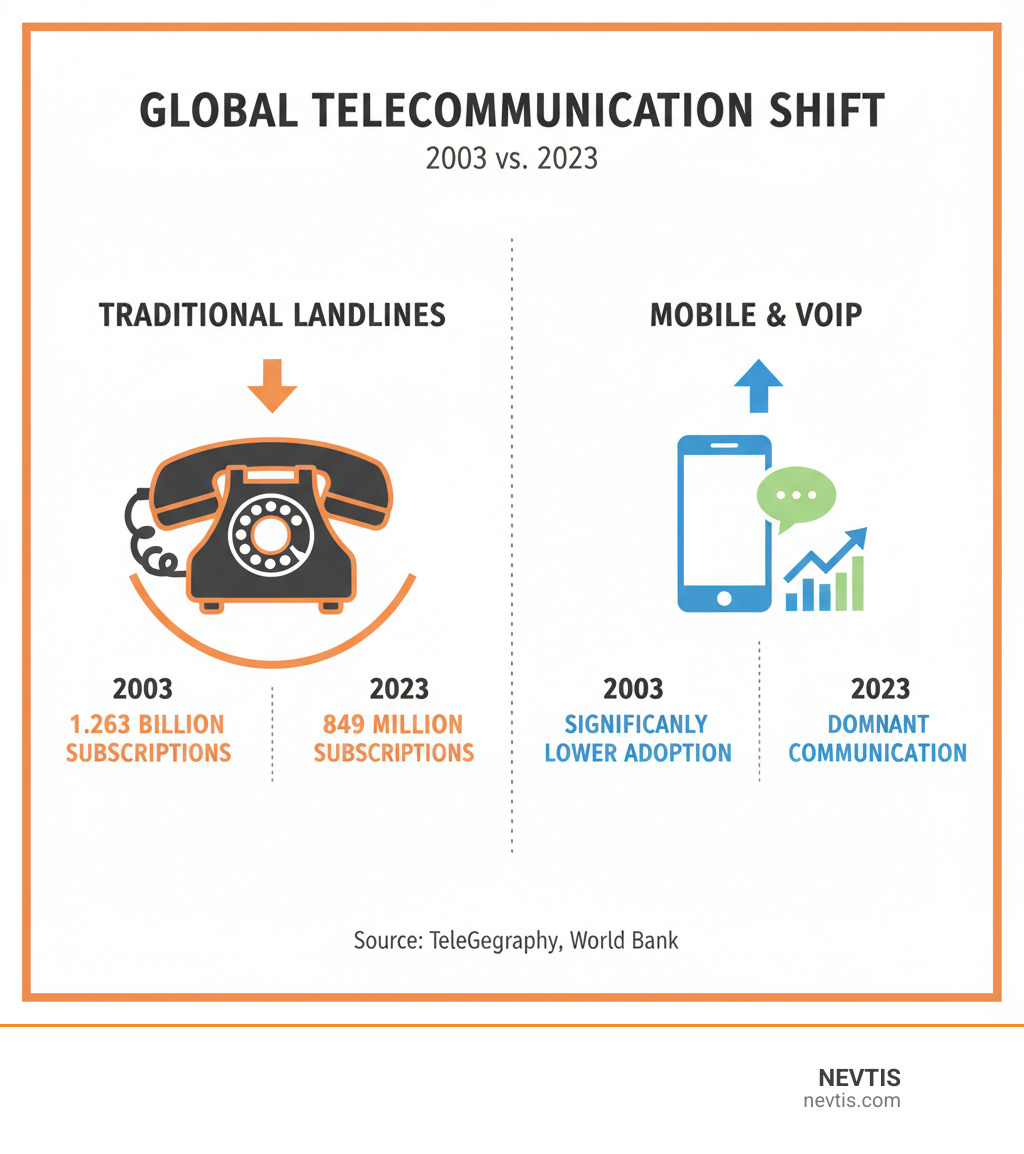
For over a century, these wired connections were the backbone of communication. But with the rise of mobile phones and internet-based calling, many now wonder: what is a landline and does it still matter?
For business owners, understanding this foundational tech is key to choosing the right modern solutions. This guide will explore what a landline is, how it works, and how it fits (or doesn’t) into today’s business world.
I’m Juan Olmedo, a builder who transitioned into a Tech and SaaS/UCaaS Engineer. My journey has given me a deep understanding of communication systems, from the earliest landline technologies to the latest cloud-based solutions, which I now use to help businesses modernize.
What is a Landline Phone, Exactly?
A landline phone provides traditional telephone service through a physical connection. Using copper wires that run underground or along poles, it creates a direct, “fixed-line” link from your phone to the broader telephone network. Because a landline is tied to a specific location—your home or business—it differs from a mobile phone that goes everywhere with you. This classic system is officially known as the Public Switched Telephone Network (PSTN) or Plain Old Telephone Service (POTS).

Understanding the Basics: What is a Landline?
At its core, a landline uses wired communication to send your voice as analog electrical signals along a physical wire. It functions without the radio waves that mobile phones and other wireless technologies rely on. Merriam-Webster defines a landline as “a telephone line that transmits signals from one station to another directly along a wire without the use of radio waves.” The term itself dates back to 1865, highlighting its long history as a cornerstone of communication. Understanding this basic definition helps clarify how different technologies impact call reliability, features, and cost.
What is a Landline Number?
A landline number is a fixed phone number linked to a specific physical address or telephone line. When you set up service in a city like Los Angeles or Anaheim, the number becomes associated with that geographic location via its area code. For example, an 818 area code instantly signals that a business is based in the San Fernando Valley.
This fixed association offers practical benefits, especially for businesses. A local landline number can boost credibility and signal a local presence, which helps build trust with customers.
Perhaps its most vital function is in emergencies. When you dial 911 from a traditional landline, emergency services can immediately pinpoint your exact physical address. While mobile phones have improved GPS, the direct address association of a landline remains a highly trusted method for dispatching help precisely where it’s needed.
The Nuts and Bolts: How Landlines Connect Your Calls
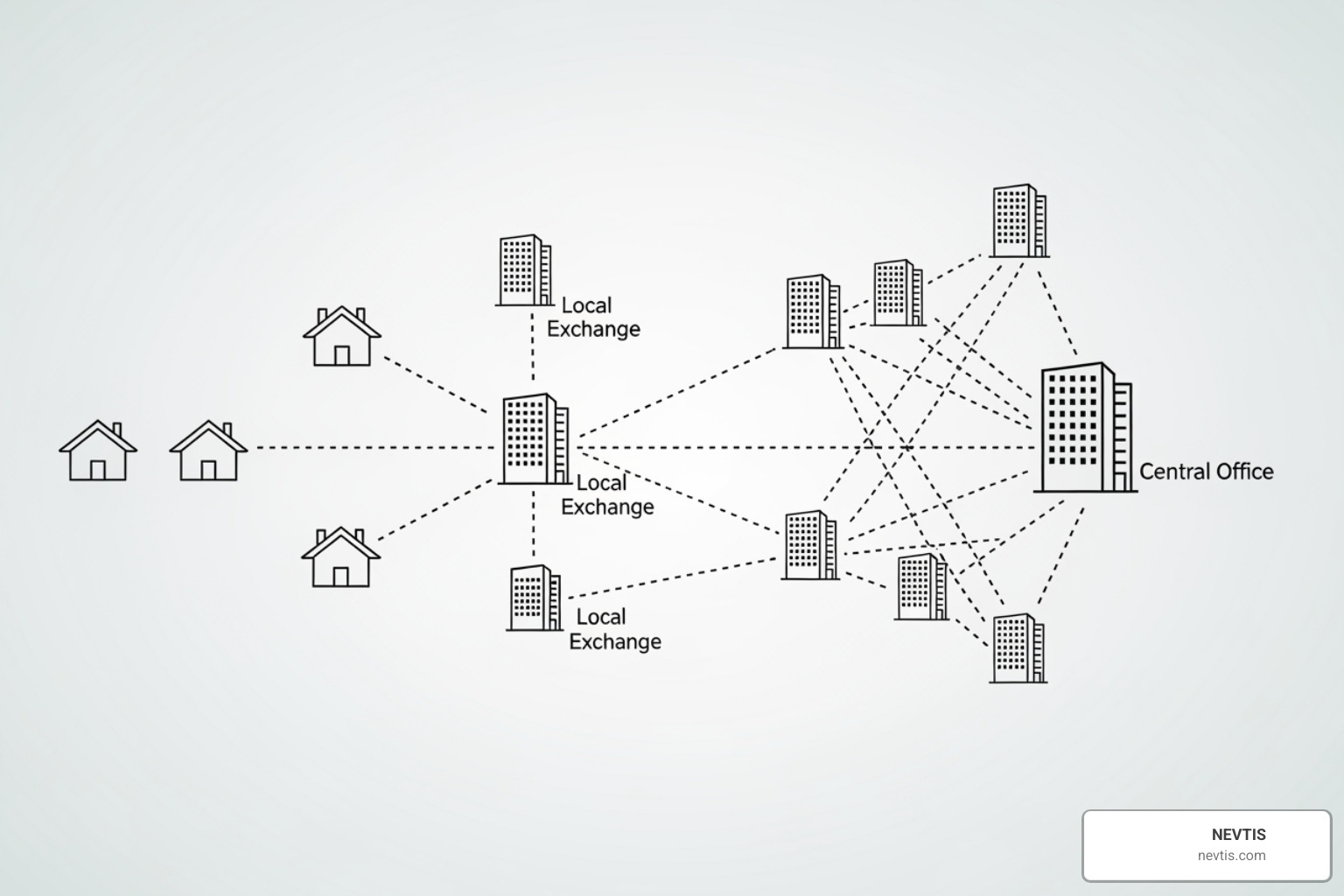
When you make a call on a traditional landline, your voice travels through the Public Switched Telephone Network (PSTN), a massive web of wires and switches that has connected people for over a century.
Here’s how it works: Your voice is converted into electrical signals that travel along copper wires to a local telephone exchange (or central office). The system then creates a dedicated circuit just for your call, a process called “circuit-switching.” This circuit stays open for the duration of your conversation, connecting you directly to the other person. This dedicated connection is why traditional landline calls have historically been so reliable and clear.
Traditional (Analog) vs. Modern Digital Landlines
Landline technology has evolved, leading to two main types: traditional analog and modern digital.
Traditional analog landlines are the original Plain Old Telephone Service (POTS). They use a copper wire infrastructure to carry your voice as continuous electrical waves. Analog’s simplicity offers a key advantage: it often works during power outages because it draws power from the telephone company, not your home. However, analog signals can degrade over distance and lack the advanced features of modern phones.
Modern digital landlines are entirely different. Instead of continuous waves, digital systems break your voice into tiny data packets, often using Voice over Internet Protocol (VoIP). Your voice is converted into digital bits, sent through the network, and reassembled on the other end.
This digital approach offers superior call quality, as digital signals resist noise better than analog, resulting in crystal-clear conversations. The real game-changer is the features. Digital landlines can integrate video conferencing, instant messaging, call forwarding, and voicemail-to-email.
For businesses, the benefits are even greater. Digital systems are more cost-effective, especially for long-distance, and integrate with other software. They are also ideal for remote and hybrid work. The FCC is accelerating the nationwide transition from old copper networks to modern fiber optic ones. So, while the term “landline” persists, the underlying technology is rapidly becoming digital and internet-based.
If you’re a business owner looking to modernize, understanding these digital solutions matters. Our VoIP solutions leverage these advances to help businesses in Los Angeles, Anaheim, and throughout Southern California stay connected with cutting-edge features at a fraction of traditional costs.
Landline vs. Mobile: A Surprising Showdown
While smartphones dominate, landlines still have unique strengths. For businesses, understanding the differences between landlines and mobile phones is key to choosing the right communication tools. Let’s compare them.
| Feature | Traditional Landline (POTS) | Mobile Phone (Cellular) |
|---|---|---|
| Reliability | Very high; dedicated circuit, less prone to network congestion | High, but can be affected by cell tower coverage, congestion |
| Call Quality | Consistent and clear over short distances; can degrade over long distances | Generally high, but can vary with signal strength |
| Power Outage Functionality | Yes, typically self-powered and works during power outages | Yes, but relies on battery life and operational cell towers |
| Location Tracking (911) | Highly accurate; directly tied to physical address | High, uses GPS, but can have varying degrees of accuracy |
| Mobility | None; fixed to a location | Full mobility; can be used anywhere with signal |
| Features | Basic (voice, caller ID, voicemail) | Extensive (apps, internet, camera, messaging, video calls) |
| Security | High against cyberattacks (analog) | Moderate to high; vulnerable to cyberattacks and eavesdropping |
Advantages of a Landline
Traditional landlines still offer key advantages, especially regarding reliability and safety.
Reliability and call quality are where copper landlines shine. Their dedicated circuit for each call means fewer dropped calls or interference, which is critical for important business conversations, especially in areas with poor cell reception.
Power outage functionality is another major benefit. Traditional POTS lines draw power from the phone company, so a corded landline phone will likely keep working when the power goes out.
For 911 accuracy, a landline is best. It automatically transmits your physical address to emergency services, ensuring your exact location is known.
Finally, traditional analog landlines offer improved security, as their physical, circuit-switched nature is less vulnerable to digital eavesdropping and cyberattacks. These advantages make a compelling case for keeping a landline, particularly for elderly residents or those in rural parts of California with unreliable cell service.
Disadvantages of a Landline
However, there are significant reasons for the decline in landline usage in our mobile-first world.
The most obvious drawback is the lack of mobility. A landline is fixed to one location, which is impractical for anyone needing to communicate on the go.
Another issue is limited features. Traditional landlines are mostly restricted to voice calls, caller ID, and basic voicemail, lacking the advanced integrations modern businesses require.
Landlines are also magnets for spam calls. Without the advanced call-blocking of modern systems, managing robocalls can be a major hassle.
Cost is another factor, as maintaining aging copper infrastructure is expensive, often leading to higher bills for a service that does less.
Perhaps the biggest disadvantage is that traditional landlines are becoming obsolete. Telecom companies are actively phasing out old copper networks in a “copper sunset,” encouraged by the FCC. This means service is becoming less reliable and will eventually be replaced by digital alternatives, as noted by PBS Newshour: “This week’s cellphone outage makes it clear: In the United States, landlines are languishing.” For businesses in Los Angeles or Anaheim, these drawbacks can hinder efficiency, making modern alternatives that offer the best of both worlds a necessity.
The Future is Calling: The Evolution of Landlines
Communication is rapidly shifting from a world of copper wires to a digital, internet-powered landscape. This changes not only how we connect but also the very definition of “what is a landline.” This industry-wide “copper sunset” marks the transition away from the old Public Switched Telephone Network (PSTN). In the United States, the FCC is encouraging providers to switch to faster, more modern fiber optics and other digital technologies, revolutionizing communication for the modern era.
The Modern Dilemma: What is a Landline’s Role Today?
With mobile phones and internet calling, what is a landline’s role today? While no longer dominant, it hasn’t vanished and still serves important purposes. According to 2022 FCC data, while 73% of U.S. homes were mobile-only, 25% still had both a landline and cell service, and 1% relied solely on a landline.
These users often include residents in rural areas of California with spotty cell service, or elderly users who prefer the simplicity and familiarity of a traditional phone. Its reliability during power outages also provides peace of mind. Some businesses also keep landlines for specific functions like alarm systems or as a solid backup communication option. As PBS Newshour noted, even as landlines are languishing, they fill a specific need: “This week’s cellphone outage makes it clear: In the United States, landlines are languishing.”
The Rise of VoIP and Cloud Communications
The decline of traditional landlines is a story of evolution, with the torch being passed to Voice over Internet Protocol (VoIP) and cloud communications. For businesses in competitive markets like Los Angeles and Orange County, adopting this technology is essential.
VoIP technology transforms phone calls by converting your voice into digital data packets that travel over the internet. This allows you to make calls from anywhere with an internet connection, using a desk phone, a computer softphone, or a mobile app.
This internet-based approach offers numerous advantages:
- Unified Communications: VoIP systems integrate phone calls with instant messaging, video conferencing, email, and CRM software. This creates a seamless communication experience for teams in Pasadena, Riverside, or working remotely.
- Advanced Features: Modern VoIP solutions offer over 50 business tools like auto-attendants, call queues, call recording, and even AI call transcription, helping businesses operate more professionally.
- Cost Savings: By using your existing internet connection, VoIP significantly reduces phone bills, especially for long-distance and international calls.
- Remote Work Enablement: Cloud-hosted VoIP systems are perfect for remote teams. The NEVTIS Plus mobile app, for instance, gives your team full access to business phone features from their smartphones anywhere in the United States.
Choosing advanced VoIP solutions is the smartest move for any forward-thinking business. To learn how NEVTIS can help your business with modern communication, explore More info about our services.
Frequently Asked Questions about Landlines
As technology evolves, questions about landlines are common. Here are straightforward answers to clear up some misconceptions.
Are landline phones still used today?
Yes, landline phones are still in use, though their role has changed. While their popularity has declined, they remain valuable in specific situations. In 2022, 25% of U.S. households still had both a landline and mobile service.
Users often include elderly individuals who prefer their simplicity and reliability, and people in rural areas of California where cell reception is poor. Many businesses also still use landlines for critical functions like alarm systems, fax machines, or as a backup system during emergencies. While not as universal as it once was, the landline has found an important niche.
Can you text from a landline?
Generally, you cannot text directly from a traditional landline phone, as it was designed for analog voice calls, not digital text data.
However, modern solutions allow businesses to text-enable their landline number. These services use a web portal or mobile app to send and receive texts using the business’s existing number. Advanced VoIP capabilities from providers like NEVTIS integrate texting directly into your business phone system, making your landline number more versatile for modern communication.
Do you need a landline for broadband internet?
Not anymore, in most cases. Historically, a landline was necessary for Digital Subscriber Line (DSL) internet, which used the same copper phone lines.
Today, modern alternatives like fiber optic and cable internet are widely available and do not rely on traditional phone lines. These technologies use their own infrastructure (glass strands for fiber, coaxial cables for cable) to deliver high-speed internet. Most internet providers now offer standalone internet packages without requiring a phone service. You can learn more about this shift here: Do you need a landline for broadband?
Conclusion
We’ve traced the landline phone’s journey from its copper-wired roots to its digital successors, showing how this foundational tool has evolved. For over a century, the landline offered best reliability, but its limitations are clear in today’s world. We are now in the midst of a “copper sunset,” a shift away from the old Public Switched Telephone Network (PSTN) toward the flexibility and advanced features of digital alternatives like Voice over Internet Protocol (VoIP).
This isn’t the end of the phone call but an exciting new chapter where communication is smarter and more integrated.
For businesses in competitive markets like Los Angeles and Anaheim, understanding this evolution is essential. Embracing modern, cloud-hosted VoIP systems open ups powerful features, enables remote work, and delivers significant cost savings—future-proofing your communication in ways traditional landlines can’t match.
At NEVTIS, we are at the forefront of this digital revolution, providing businesses across the US with advanced VoIP solutions designed for today’s dynamic world. Our goal is to empower you to communicate more effectively and intelligently.
Are you ready to connect to the future? We invite you to Explore our advanced VoIP solutions and find how NEVTIS can help your business thrive.