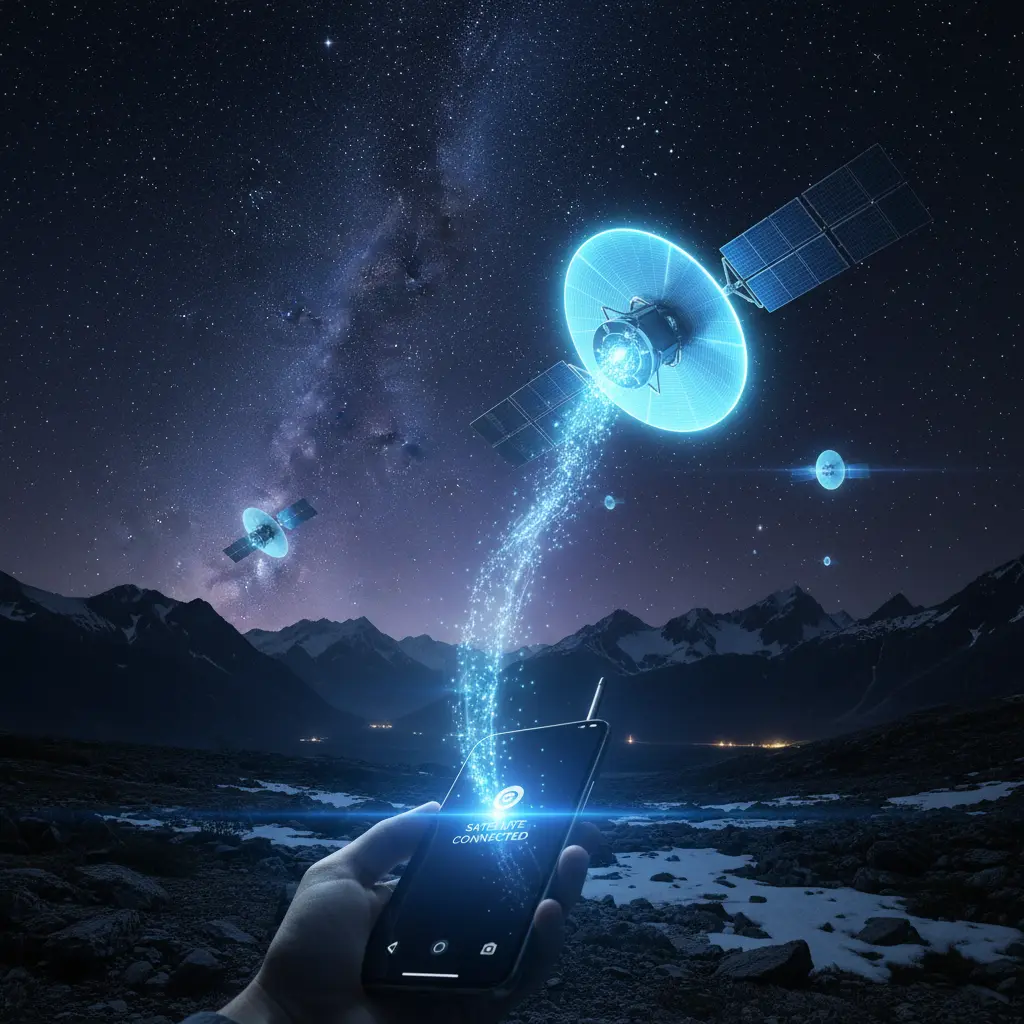
Have you ever looked at your smartphone in a remote location, only to see the dreaded ‘No Service’ indicator staring back at you? The telecommunications industry is currently undergoing a massive shift that will soon make cellular dead zones a relic of the past. Welcome to the era of direct-to-device satellite connectivity, where the sky is literally the limit for your mobile coverage.
For decades, the fundamental architecture of mobile communications has relied entirely on a terrestrial network of cell towers, fiber optic cables, and localized base stations. While this infrastructure has successfully connected billions of people across urban and suburban landscapes, it has always faced a geographical limitation. Mountains, vast oceans, dense forests, and remote deserts have remained stubbornly disconnected, creating isolated pockets where standard telecommunications gadgets become virtually useless. Today, however, we are witnessing the dawn of Non-Terrestrial Networks (NTN), a revolutionary trend that integrates Low Earth Orbit (LEO) satellites directly with everyday smartphones.
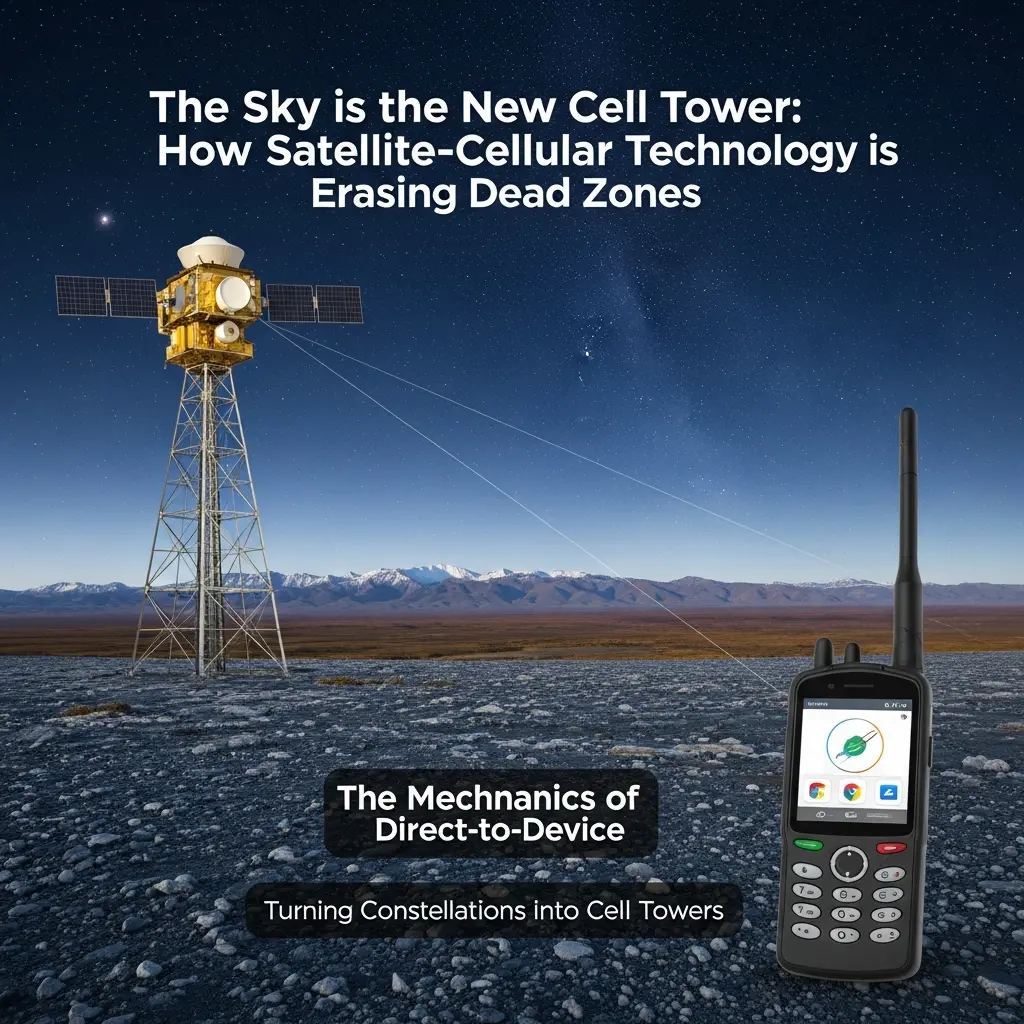
The Mechanics of Direct-to-Device Telecommunications
Turning Constellations into Cell Towers
To understand the magnitude of this technological leap, we must first look at how traditional satellite phones functioned. Historically, communicating via satellite required bulky, expensive equipment characterized by thick external antennas and significant power requirements. These devices were reserved for maritime professionals, extreme explorers, and military personnel. The modern direct-to-device ecosystem flips this paradigm entirely. Instead of requiring consumers to purchase specialized satellite phones, telecommunications companies are now placing the complexity in space.
By launching highly sophisticated LEO satellites equipped with massive phased-array antennas, companies are effectively deploying cellular broadband networks in space. These satellites orbit the Earth at altitudes of approximately 300 to 500 miles, flying at incredible speeds while continuously beaming connectivity down to unmodified, standard smartphones. When a user steps out of range of a traditional terrestrial cell tower, their mobile device can seamlessly handshake with a passing satellite, maintaining a continuous link.
Overcoming the Laws of Physics
Achieving this seamless integration is no small feat. Engineers and telecommunications experts have had to overcome profound physical challenges, such as the Doppler effect caused by satellites moving at roughly 17,000 miles per hour. Furthermore, standard smartphones have strictly limited power outputs and small internal antennas. To bridge a connection spanning hundreds of miles through the Earth’s atmosphere without draining a smartphone’s battery in minutes requires incredibly sensitive receivers on the satellites and advanced software algorithms on the device itself. The implementation of new global network standards has provided a universal blueprint for this technology, ensuring that future telecoms gadgets are universally compatible with space-based networks.
Bridging the Global Connectivity Gap
The Transformative Power of Universal Coverage
The implications of direct-to-device satellite-to-cellular technology extend far beyond the convenience of sending a text message from a remote hiking trail. At its core, this innovation represents a monumental step toward digital equity and global inclusion. In our modern digital economy, connectivity is no longer a luxury; it is a fundamental utility required for education, healthcare, financial inclusion, and emergency response.
To put the scale of this telecommunications evolution into perspective, we must look at the current data driving the industry forward. According to a 2023 report by Juniper Research, the number of smartphones utilizing satellite connectivity is expected to reach 400 million globally by the year 2028. This staggering growth highlights the massive consumer appetite for ubiquitous coverage. Furthermore, data from GSMA Intelligence indicates that extending mobile coverage through non-terrestrial networks could help close the connectivity gap for the roughly 400 million people worldwide who currently live completely outside the footprint of any mobile broadband network. By effectively erasing terrestrial dead zones, satellite-to-cellular technology offers a lifeline to historically underserved communities, bringing them into the global digital fold.
Everyday Impact and Telecommunications Gadgets
Beyond the Emergency SOS
The earliest iterations of direct-to-device connectivity focused heavily on emergency SOS messaging. While life-saving, these early features were limited to low-bandwidth text transmissions designed solely to contact emergency services. However, the rapidly advancing telecoms ecosystem is already pushing beyond these initial constraints. The next generation of non-terrestrial networks aims to support full two-way messaging, voice calls, and eventually, broadband internet browsing directly on standard smartphones.
Imagine a world where maritime workers can coordinate operations from the middle of the Pacific Ocean using the exact same smartphone they use on land. Consider the agricultural sector, where farmers working on vast, remote expanses of land can utilize advanced Internet of Things gadgets to monitor soil moisture, track livestock, and automate machinery without having to install costly private cellular networks. The fusion of terrestrial and non-terrestrial networks will create a resilient, unified web of connectivity that adapts to the user’s environment invisibly and autonomously.
Practical Tips for Maximizing Satellite-to-Cellular Features
As this technology transitions from specialized niches to mainstream consumer availability, understanding how to interact with these new capabilities is crucial. If you are preparing to venture off the grid or simply want to maximize the potential of your modern telecommunications gadgets, here are some essential strategies to keep in mind:
- Maintain a clear line of sight to the sky: Unlike traditional cellular signals that can bounce off buildings or penetrate walls, direct-to-device satellite connections require an unobstructed view of the open sky. Dense tree canopies, deep canyons, or simply being indoors will severely degrade or entirely block the satellite signal. When attempting to connect, move to an open area and hold your device naturally, allowing its internal antennas to face upward.
- Manage your bandwidth expectations: While the technology is advancing rapidly, current satellite-to-cellular connections are primarily optimized for essential communications such as text messaging and basic voice calls. Do not expect to stream high-definition video or download large files while connected to an LEO satellite. Prioritize critical communications and use data-light messaging applications.
- Conserve your battery life strategically: Although modern smartphones are designed to connect to satellites efficiently, searching for an overhead signal in a remote area can still consume more battery power than a standard terrestrial connection. If you are venturing into the wilderness, carry a reliable solar charger or power bank, and keep your device in airplane mode, activating the satellite connection only when you need to send or receive a message.
- Keep your software and carrier settings updated: The software algorithms that manage the handover between terrestrial cell towers and space-based networks are constantly being refined. Ensure that your smartphone operating system and your mobile carrier settings are updated to the latest versions. This guarantees that your device has the most recent orbital data and connection protocols required to seamlessly handshake with passing satellites.
Looking to the Future: A Connected Planet
The Psychological Impact of Universal Connectivity
As we stand on the brink of this new era in telecommunications technology, it is worth reflecting on what universal connectivity truly means for humanity. The erasure of dead zones provides more than just logistical convenience; it offers a profound sense of psychological safety. The knowledge that you are never truly isolated, that a lifeline, a loved one, or emergency assistance is always just a signal away, changes the way we interact with the natural world. It empowers us to explore further, work more remotely, and live more boldly, secure in the knowledge that the sky above is watching over us, keeping us tethered to the global community.
The evolution from terrestrial boundaries to limitless non-terrestrial networks is a testament to human ingenuity. It reminds us that when we collaborate and push the boundaries of physics and engineering, we can build a world where no one is left in the dark. As telecommunications gadgets continue to evolve, they will serve not just as tools of convenience, but as vital instruments of global unity.
We are entering an incredibly exciting chapter in the story of human connection, and the conversation is just beginning. What are your thoughts on the future of satellite-to-cellular technology? How would ubiquitous coverage change the way you travel, work, or explore? We invite you to join our community of technology enthusiasts and forward-thinkers. Share your insights, ask questions, and help us shape the discussion around the innovations that are redefining our world. Together, let us stay connected, stay curious, and continue to look toward the sky.
Leave a Reply