Imagine landing in a foreign country after a long flight and instantly connecting to a local high-speed 5G network before your plane has even taxied to the gate, all without hunting for a kiosk or fumbling with a paperclip. This seamless experience is no longer a scene from a science fiction novel but the tangible reality of embedded SIM technology, a trend that is rapidly rendering the plastic cards we have known for decades obsolete. As the telecommunications industry pivots toward more integrated solutions, the shift from physical SIMs to eSIMs and now iSIMs represents one of the most significant architectural changes in mobile device history.
Beyond the Plastic Card: A Historical Perspective
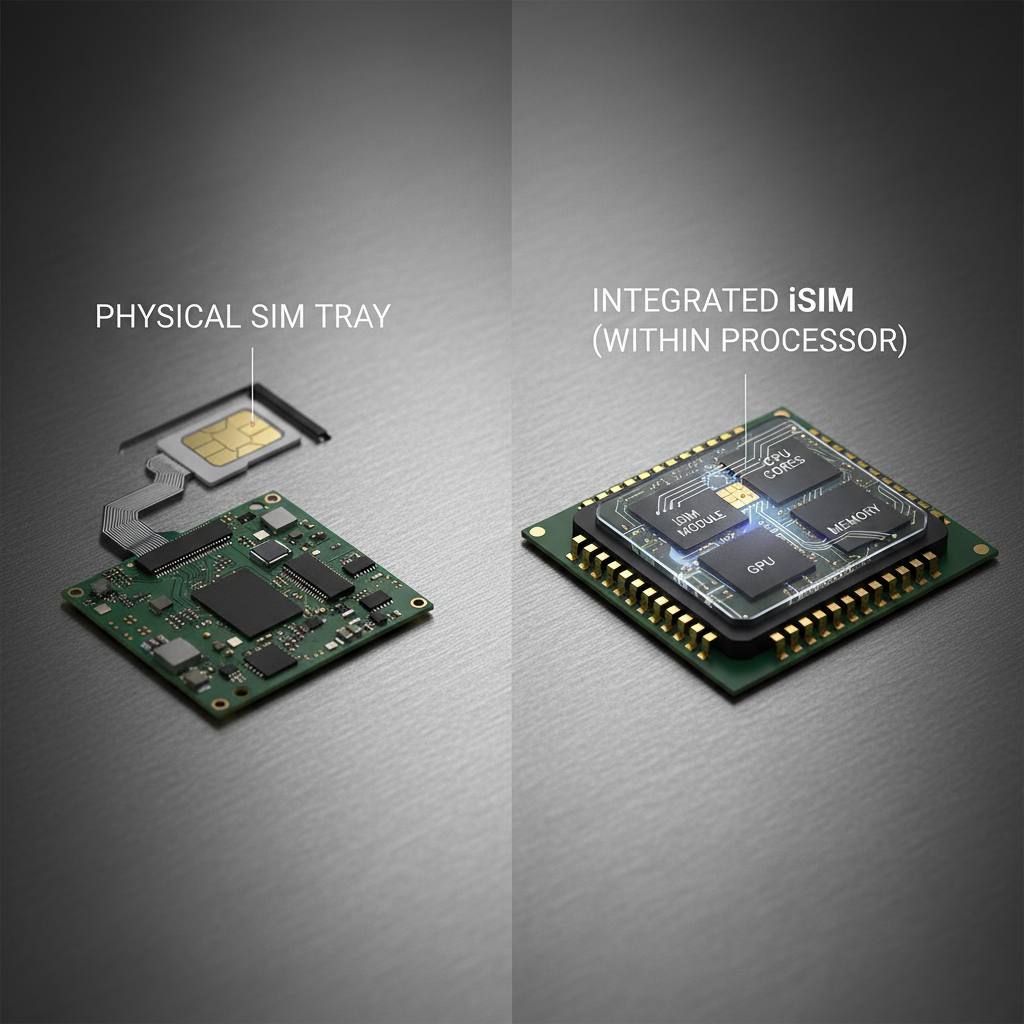
To understand the magnitude of this shift, we must first look back at the humble beginnings of the Subscriber Identity Module (SIM). Originally the size of a credit card, the SIM was designed to securely store the international mobile subscriber identity (IMSI) number and its related key, which are used to identify and authenticate subscribers on mobile telephony devices. Over the years, the relentless drive for smaller, sleeker devices forced the SIM card to shrink—first to Mini, then Micro, and finally to the Nano-SIM. However, even the Nano-SIM requires a physical tray, contacts, and internal volume within the device that engineers are desperate to reclaim for larger batteries or additional sensors.
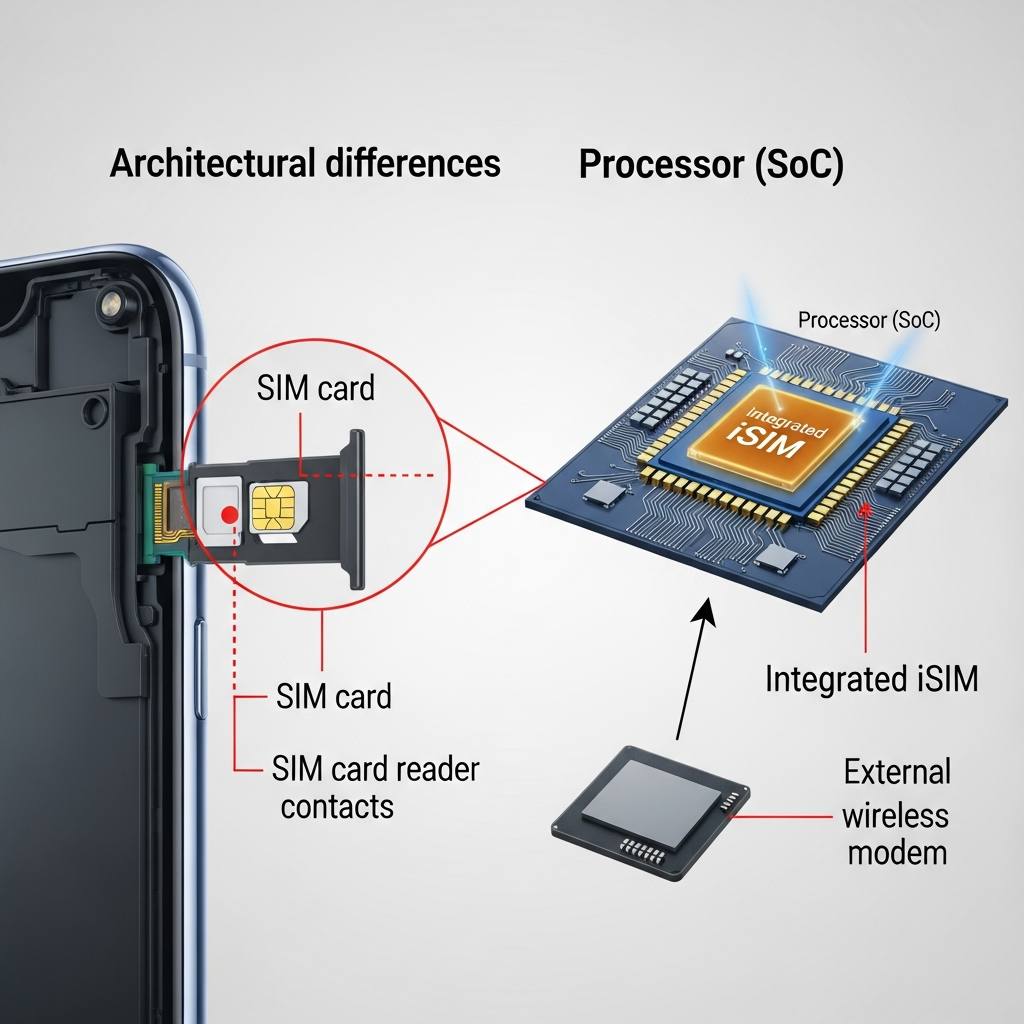
The introduction of the eSIM (embedded SIM) changed the paradigm completely. Unlike its predecessors, the eSIM is a rewritable chip soldered directly onto the device’s motherboard. It cannot be removed, but it can be updated wirelessly. This technology, known technically as eUICC (Embedded Universal Integrated Circuit Card), allows users to download data profiles from different carriers over the air. The evolution does not stop there; we are now witnessing the dawn of the iSIM (integrated SIM), where the SIM functionality is moved directly into the device’s main processor (SoC), eliminating the need for a dedicated chip entirely.
The Mechanics of Freedom: How It Works
The magic behind this technology lies in Remote SIM Provisioning (RSP). In a traditional setup, changing a carrier meant physically replacing the card provided by the operator. With eSIM and iSIM technology, the credentials are software-defined. When a user selects a plan—whether through a QR code scan or a carrier’s app—the profile is securely downloaded and decrypted by the embedded chip. This architecture supports multiple profiles stored simultaneously, although usually only one or two can be active at a time depending on the device’s Dual SIM Dual Standby (DSDS) capabilities.
This flexibility fundamentally alters the relationship between the consumer and the Mobile Network Operator (MNO). It democratizes connectivity, allowing users to treat mobile data much like they treat Wi-Fi networks—hopping between providers based on coverage, cost, or data requirements without the friction of physical logistics. For device manufacturers, the removal of the SIM tray removes a significant point of liquid ingress, making it easier to design waterproof and dustproof devices, while freeing up precious millimeter-level space for other components.
Data-Driven Adoption: The Surge in Numbers
The adoption of this technology is not merely a niche trend for tech enthusiasts; it is a global industrial shift supported by robust statistical data. The convenience for consumers and the logistical savings for operators are driving exponential growth in the sector.
According to a comprehensive study by Juniper Research, the value of the global eSIM market is expected to skyrocket. They forecast that the number of eSIM-connected devices will reach 3.4 billion by 2025, rising from 1.2 billion in 2021. This growth is primarily driven by the consumer sector, specifically smartphones and wearables, where Apple and Samsung have led the charge.
Furthermore, the travel industry is acting as a massive catalyst. Kaleido Intelligence reports that roaming data traffic generated by consumer eSIMs will increase by 500% by 2028. This statistic underscores a behavioral shift: travelers are abandoning expensive carrier roaming packages in favor of local or regional digital data plans that can be purchased and activated in seconds.
The Security and Enterprise Advantage
While consumer convenience grabs the headlines, the implications for enterprise security and the Internet of Things (IoT) are perhaps even more profound. Physical SIM cards are susceptible to theft; if a phone is stolen, the thief can remove the SIM to stop the owner from tracking the device or place it in another phone to intercept OTPs (One-Time Passwords). An eSIM cannot be physically removed. This adds a layer of security, as the device remains connected to the network—and trackable—as long as it has power.
For enterprises managing vast fleets of devices, such as logistics companies with thousands of tracking sensors or smart utility meters, the iSIM is revolutionary. It allows for “zero-touch” provisioning. A company can deploy ten thousand sensors globally and program them to connect to the strongest local network automatically upon activation. This eliminates the logistical nightmare of manually inserting SIM cards into thousands of industrial devices and managing physical inventory.
Mastering the Transition: Practical Tips for Users
Switching from a physical card to a digital profile can seem daunting to those accustomed to the tangible reassurance of a plastic chip. However, the process is designed to be user-friendly. To help you navigate this transition smoothly and secure your mobile identity, consider the following practical advice:
-
- Verify Carrier Locking Status: Before attempting to buy a third-party travel eSIM or switching carriers digitally, ensure your device is “unlocked.” Even if your phone has eSIM hardware, if it is contractually locked to a specific carrier, you will not be able to install a profile from a competitor until the device is paid off or the lock is removed.
-
- Preserve Your QR Codes: When a carrier provides an eSIM activation QR code, treat it like a password. Do not throw it away immediately. While many carriers allow you to regenerate these through their app, having the original code can save you hours of customer service calls if you accidentally delete the profile or need to reset your device.
- Label Your Profiles: Modern devices allow you to store five, eight, or even more eSIM profiles, though usually only two are active. Go into your settings and label them clearly (e.g., “Work Home,” “Japan Travel,” “Emergency Backup”). This prevents you from accidentally activating a roaming profile while at home or using your expensive primary data while abroad.
The Future is Integrated and Green
The environmental impact of this trend cannot be overstated. The telecommunications industry produces billions of plastic SIM cards annually, along with the paper and plastic packaging that accompanies them. The shift to eSIM and iSIM significantly reduces this e-waste stream. It also reduces the carbon footprint associated with shipping these physical items around the globe. As we look toward the future, the iSIM will likely become the standard for 6G devices, integrating connectivity so deeply into the hardware that the concept of a “subscriber module” becomes completely invisible to the end user.
We are entering an era where connectivity is fluid, software-defined, and borderless. The technology is here to liberate us from the constraints of physical hardware, offering a level of flexibility that aligns perfectly with the modern, mobile lifestyle. As you upgrade your devices in the coming years, you will likely find that the SIM slot has vanished, replaced by a smarter, more efficient digital soul.
We invite you to embrace this invisible revolution. Have you already made the switch to an eSIM for your daily driver or your travels? How has it changed the way you manage your connectivity? Join the conversation in our community forums and share your experiences as we navigate this exciting new chapter in telecommunications together.
Leave a Reply