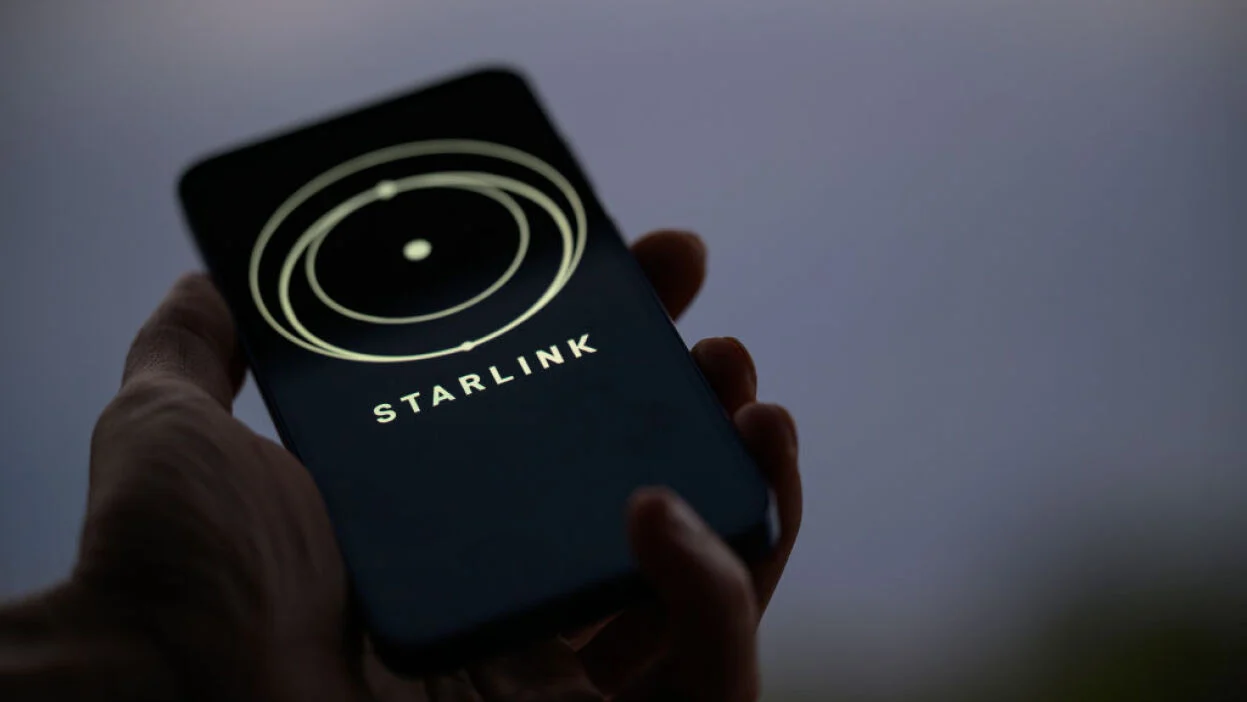
Starlink’s mobile satellite internet service transforms connectivity by beaming signals directly to unmodified smartphones, eliminating the need for dishes, apps, or hardware upgrades. This Direct-to-Cell (D2C) technology promises lifeline access in remote areas, disaster zones, and coverage dead spots worldwide. As partnerships with carriers like T-Mobile roll out, it signals a shift from fixed broadband to ubiquitous mobile coverage.
How Direct-to-Cell Works
Satellites equipped with cellular modems orbit as space-based cell towers, linking to standard LTE and 5G phones with a clear sky view. Users experience seamless handoffs from ground networks—no manual switching or special equipment required. Initial focus lands on essentials like SMS, MMS, 911 calls, and location sharing, with voice and data capabilities scaling up as satellite density grows.
This builds on Starlink’s low-Earth orbit constellation, now exceeding thousands of satellites, to minimize latency compared to traditional geostationary options. Phones from the past four years generally support it, auto-connecting outdoors where terrestrial signals fade. Indoor use remains limited, prioritizing open-sky scenarios like hiking trails or rural drives.
Rollout Milestones and Partnerships
T-Mobile’s beta launched early 2025, amassing 1.8 million users and over a million messages before the full US debut in July 2025. Pricing integrates into existing plans: free for premium tiers ($17+ monthly per multi-line), or $10/month add-on, extending to AT&T and Verizon customers too.
Global expansion accelerates with carriers like Australia’s Optus and Japan’s KDDI testing integrations, targeting underserved regions. SpaceX plans third-generation satellites by mid-2026, boasting 1Tbps downlink capacity per bird to boost speeds and reliability. Recent updates highlight 2 million active US customers achieving near-200Mbps median downloads during peaks, underscoring network maturity.
Real-World Capabilities and Limitations
For everyday users, D2C excels in basics: reliable texting during blackouts, SOS alerts for emergencies, and navigation in off-grid spots. Early adopters report success in rural America, maritime voyages, and wildfire evacuations—scenarios where ground infrastructure fails. Data throughput starts modest, akin to 2G/3G edges, but evolves toward broadband as more satellites launch and beamforming tech refines signals.
Challenges persist: signals weaken under tree cover or buildings, and high-speed data demands clear horizons. It’s not a home internet rival but a gap-filler for mobiles, complementing Starlink’s dish-based residential service. Battery drain stays minimal since phones treat it like any carrier handover.
Broader Impacts on Connectivity and Society
This launch erodes digital divides, empowering remote workers, adventurers, and disaster responders with always-on access. In the US, it bolsters rural economies by enabling telemedicine, online education, and e-commerce without fixed lines. Globally, it aids developing nations leapfrogging infrastructure hurdles.
Economically, Starlink fuels SpaceX growth, with analysts eyeing direct-to-device as a multi-billion revenue stream by 2027. Rivals like Apple’s emergency satellite feature or AST SpaceMobile chase similar tech, spurring competition. Environmentally, denser satellite fleets raise light pollution concerns, though SpaceX mitigates with anti-reflective coatings.
Future Roadmap and What to Watch
By late 2026, expect voice calls and streaming-viable data as V3 satellites deploy via Starship reusables, slashing costs. Starlink explores a “Starlink Phone” for optimized integration, though unmodified devices remain the focus. Regulatory nods in Europe and Asia pave international scaling, potentially covering 100% of oceans and poles.
For users, monitor carrier announcements—beta waitlists fill fast. Test it on your next road trip: step outside, and your phone might just connect from space. Starlink’s D2C doesn’t just launch a service; it redefines mobility in a connected world
Leave a Reply