
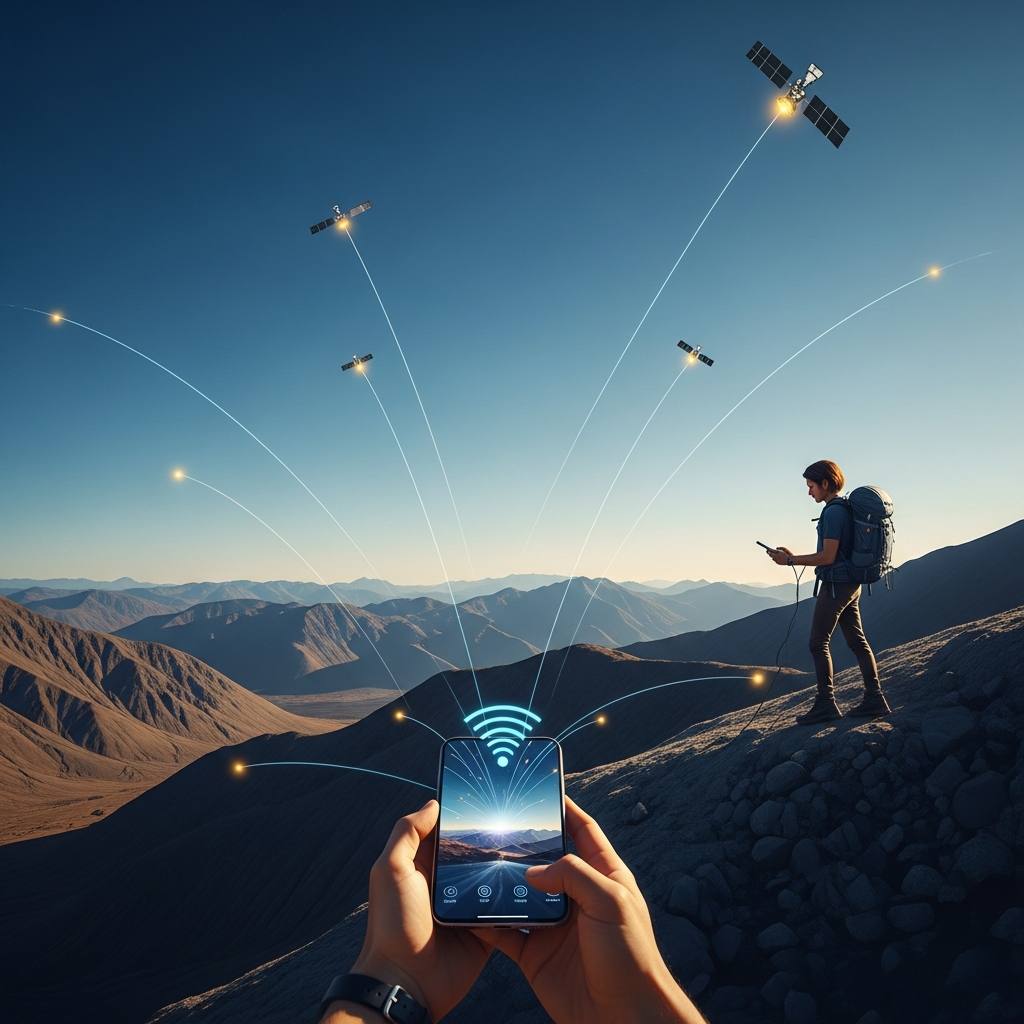
Imagine standing in the most remote corner of a national park, miles from civilization and terrestrial towers, yet watching the signal bars on your standard smartphone light up with connectivity. This scenario, once the exclusive realm of expensive, brick-sized specialist hardware, is rapidly becoming a daily reality as the telecommunications industry embraces the dawn of direct-to-device satellite technology. We are witnessing a paradigm shift that promises to erase dead zones and redefine what it means to be truly connected.
The Evolution of Non-Terrestrial Networks
For decades, the telecommunications ecosystem has been bound to the ground. Cell towers, fiber optic cables, and microwave links have formed the backbone of global connectivity. However, this terrestrial infrastructure has inherent limitations. Mountains, oceans, and vast rural landscapes present economic and logistical challenges that have left billions of people and millions of square miles disconnected. The industry’s answer to this has historically been specialized satellite phones—reliable, but cumbersome, expensive, and inaccessible to the average consumer.
Today, we are seeing the integration of Non-Terrestrial Networks (NTN) directly into the consumer mobile experience. This evolution is driven by the convergence of advanced Low Earth Orbit (LEO) satellite constellations and new standards in mobile chipsets. Unlike geostationary satellites that orbit 36,000 kilometers away, resulting in high latency, LEO satellites orbit between 500 and 2,000 kilometers above Earth. This proximity allows for faster data transmission and, crucially, the ability to communicate with the small, internal antennas found in standard smartphones.
Breaking Down the Technology
The magic behind this trend lies in the standardization efforts led by the 3rd Generation Partnership Project (3GPP). With the release of Release 17 and the upcoming Release 18, 5G standards now officially support satellite components. This means that mobile network operators (MNOs) can partner with satellite providers to act as roaming partners in the sky. When a user moves out of range of a terrestrial tower, the phone seamlessly hands over the connection to a satellite passing overhead, much like it would hand over to a different cell tower while driving down a highway.
Currently, the technology is in its nascent stage, primarily focused on emergency messaging and low-bandwidth data. However, the trajectory is clear. As satellite constellations grow denser and mobile modems become more sophisticated, we are moving toward a future of voice calls and broadband data directly from space to your pocket. This has profound implications not just for hikers and maritime workers, but for bridging the digital divide in developing nations where laying fiber is cost-prohibitive.
The Economic and Social Impact
The implications of ubiquitous coverage extend far beyond convenience. In the realm of public safety, direct-to-device connectivity ensures that emergency services can be reached from anywhere on the planet. For the Internet of Things (IoT), it means agricultural sensors in remote fields or logistics trackers on shipping containers can remain online without expensive proprietary gateways. This democratization of connectivity is set to unlock significant economic value.
The market potential for this technology is staggering as it opens up revenue streams that were previously inaccessible to traditional carriers. According to a 2023 report by GSMA Intelligence, the revenue opportunity for direct-to-device satellite services could reach approximately $30 billion by 2035, driven by the demand for continuous connectivity in automotive, consumer, and IoT sectors. This statistic highlights that the integration of space and ground networks is not merely a technical novelty but a substantial economic frontier.
Furthermore, the social impact on unconnected populations cannot be overstated. The International Telecommunication Union (ITU) reports that while 95% of the world has access to a mobile broadband network, the remaining 5%—representing vast geographical areas and millions of people—creates a digital divide that satellite technology is uniquely positioned to solve. By bypassing the need for ground infrastructure, satellite-to-mobile technology serves as the ultimate equalizer in the global digital economy.
Practical Tips for Utilizing Satellite Connectivity
As this technology begins to roll out in the latest flagship smartphones and through carrier updates, early adopters need to understand the nuances of communicating via satellite. It functions differently than terrestrial cellular data, and knowing how to optimize usage is key to a frustration-free experience.
- Prioritize a Clear View of the Sky: Unlike cellular signals that can penetrate buildings and dense foliage to some extent, satellite signals are line-of-sight. To establish a connection, you must be outdoors with an unobstructed view of the horizon. Trees, canyons, and tall buildings can block the signal path to the fast-moving LEO satellites.
- Understand Bandwidth Limitations: Current iterations of direct-to-device technology are optimized for small packets of data. Do not expect to stream 4K video or engage in high-speed browsing immediately. Focus on text-based communication, location sharing, and emergency alerts. Patience is required, as messages may take anywhere from 15 seconds to a few minutes to transmit depending on satellite availability.
- Manage Battery Consumption: searching for a satellite signal requires your phone’s radio to work much harder than usual, which can drain the battery rapidly. If you are in a remote area, use the feature only when necessary and keep your device in airplane mode when not in use to preserve power for when you truly need to connect.
Challenges and the Road Ahead
Despite the excitement, challenges remain. Regulatory hurdles regarding spectrum rights vary from country to country, creating a complex patchwork of permissions that satellite operators must navigate. Additionally, the issue of ‘space debris’ is a growing concern; launching thousands of new satellites to support these networks requires responsible stewardship of the orbital environment to prevent collisions that could render orbits unusable.
Technologically, the industry is working on improving the link budget—essentially the signal strength—to allow for indoor penetration and higher data rates. As chipmakers integrate more efficient amplifiers and antennas into the next generation of smartphones, the friction of using satellite connectivity will decrease, eventually becoming invisible to the user. The goal is a unified network where the user never has to think about whether they are connected to a tower or a star.
A Future Without Boundaries
The convergence of terrestrial and non-terrestrial networks marks a pivotal moment in human communication. We are moving away from a world of fragmented coverage maps toward a seamless global fabric of connectivity. This shift empowers individuals to explore further, work remotely from truly anywhere, and rest assured that safety is never out of reach. It is a testament to human ingenuity that we have turned the cold vacuum of space into a utility that fits in our pockets.
As we look to the horizon, let us appreciate the complex symphony of technology occurring above our heads. The next time you find yourself far from the beaten path, remember that you are no longer alone. We invite you to stay curious, keep exploring the boundaries of what is possible, and join the conversation as we build a community dedicated to a truly connected world.