Tag: MOBILE MESSAGING

  • The End of the Green Bubble Divide: Embracing the RCS Revolution in Mobile Messaging

    The End of the Green Bubble Divide: Embracing the RCS Revolution in Mobile Messaging


    For years, the mobile landscape has been silently divided by a color-coded chasm that dictated the quality of our digital conversations, splitting users into distinct camps based on their operating systems. This technological segregation often resulted in pixelated videos, broken group chats, and a lack of basic typing indicators, creating friction in our daily communications. However, with the widespread adoption of Rich Communication Services (RCS) and its recent integration into the iOS ecosystem, we are finally witnessing the dawn of a truly unified messaging era.

    Understanding the Shift: From SMS to RCS

    To truly appreciate the magnitude of this trend, we must look back at the humble beginnings of mobile messaging. Short Message Service (SMS) was the bedrock of mobile communication for decades, limited to 160 characters and devoid of rich media capabilities. Multimedia Messaging Service (MMS) attempted to bridge the gap but was plagued by low file size limits and compression issues. These legacy protocols were sufficient for the flip-phone era, but they struggled to keep pace with the smartphone revolution.

    RCS, or Rich Communication Services, is the industry’s answer to modernizing carrier-based messaging. Unlike proprietary apps that require both users to download specific software (like WhatsApp or Telegram), RCS operates directly through the native messaging app on your phone, provided by the carrier network and the internet. It transforms the standard texting experience into something akin to instant messaging, offering high-resolution photo and video sharing, read receipts, typing indicators, and better group chat management.

    The most significant catalyst in this recent trend is the adoption of the RCS Universal Profile by major industry players, culminating in Apple’s integration of RCS support in iOS 18. This move effectively ends the era where cross-platform messaging was a degraded experience. It signifies a maturation of the telecommunications ecosystem, where interoperability is prioritized over walled gardens, ensuring that communication remains seamless regardless of the device in your pocket.

    The Technical Architecture of Connectivity

    At its core, RCS relies on data connectivity (Wi-Fi or cellular data) rather than the cellular voice signaling path used by SMS. This architectural shift allows for a much richer payload of information. When a device sends an RCS message, it queries the capability of the recipient’s device. If the recipient is RCS-enabled, the message is sent with full rich features. If not, it seamlessly falls back to SMS or MMS, ensuring the message is always delivered.

    This \”capability discovery\” mechanism is vital for the user experience. It happens instantly in the background, allowing the interface to adjust dynamically. For instance, the input field might change to indicate \”Chat message\” instead of \”Text message,\” signaling that rich features are active. This sophisticated backend negotiation is what makes the technology feel like magic to the end-user, erasing the frustration of failed media uploads or garbled group texts.

    Why This Matters: The Impact on Consumer Experience

    The practical benefits of this shift are profound. For families and friend groups with mixed device preferences, the \”green bubble\” stigma is rapidly fading. No longer will a video of a grandchild’s first steps arrive as a blurry, stamp-sized thumbnail on a relative’s phone. High-fidelity media sharing is now standard across platforms, democratizing the quality of connection.

    Furthermore, reliability has improved. Because RCS can operate over Wi-Fi, users in areas with poor cellular reception but strong internet connectivity can continue to message without interruption. This is particularly crucial for remote workers and travelers who may rely on hotel or coffee shop Wi-Fi networks where cellular signals are unable to penetrate.

    By the Numbers: The Rise of Rich Messaging

    The trajectory of RCS adoption paints a clear picture of a technology that has moved from niche to norm. According to recent data from GSMA Intelligence, there are now over 1.2 billion monthly active users of RCS globally as of 2024, a figure that is expected to surge significantly following wider iOS integration. This massive user base underscores that RCS is not just a feature; it is the new global standard.

    From a business perspective, the engagement metrics are equally compelling. Research by Mobilesquared indicates that RCS business messaging generates click-through rates (CTR) roughly 10 times higher than traditional SMS. This statistic highlights how rich interactivity—such as carousel menus, quick-reply buttons, and verified sender branding—creates a more trustworthy and engaging environment for users compared to the plain text links of the past.

    Security and Trust in the Modern Age

    With great connectivity comes the responsibility of security. Traditional SMS is notoriously insecure, susceptible to spoofing and interception. RCS introduces verified sender profiles, which help combat phishing attempts (smishing) by allowing businesses to register their brand identity. When you receive a message from your bank via RCS, you can see their logo and a verification badge, providing an immediate visual layer of trust.

    However, it is important to note that encryption standards can vary. While Google’s implementation of RCS typically includes end-to-end encryption (E2EE) for one-on-one chats, the Universal Profile standard itself requires robust implementation by all carriers to ensure total privacy. As the technology matures, we are seeing a push toward making E2EE the default across all cross-platform communications, further securing our digital conversations against prying eyes.
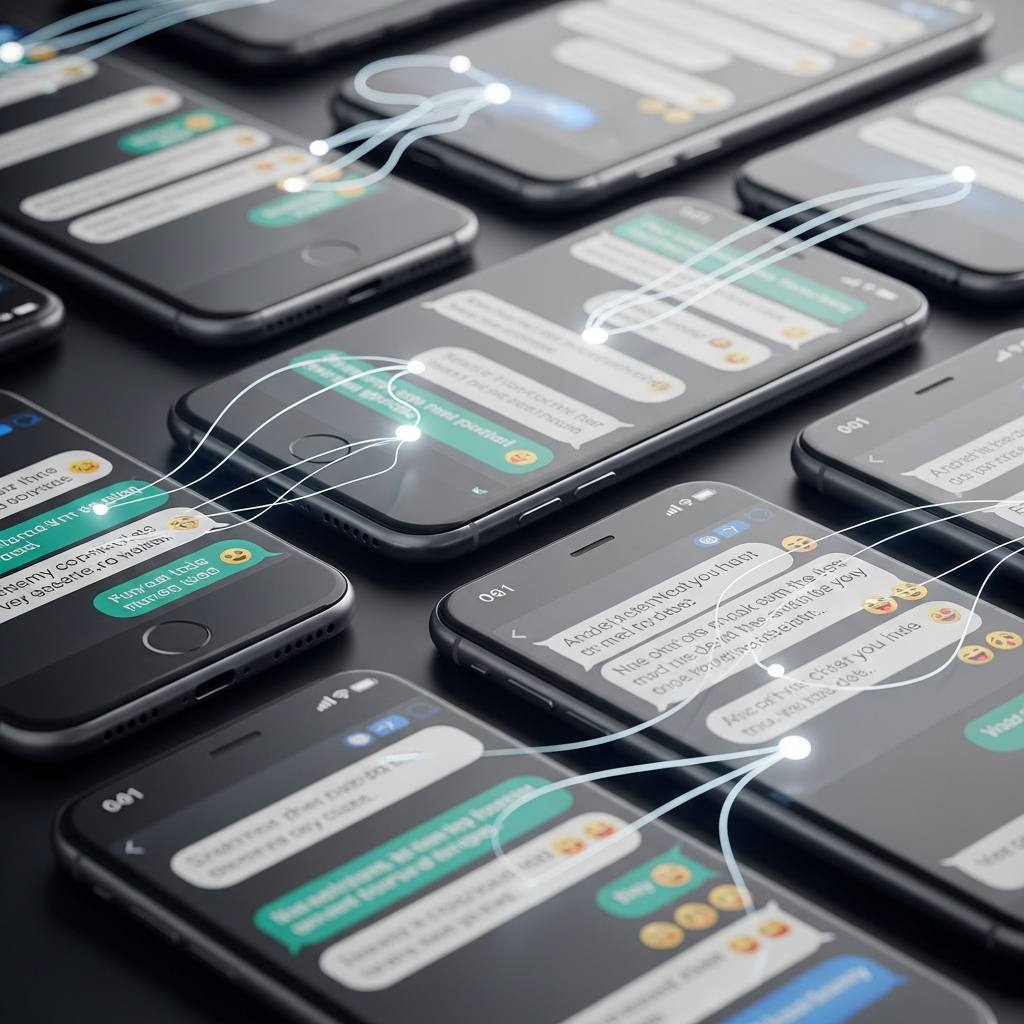
    A high-end, photorealistic editorial photograph depicting a seamless, unified mobile messaging experience, with diverse smartphones displaying a single, continuous chat thread, symbolizing the end of green and blue bubble divisions, with subtle futuristic digital interface elements.

    Practical Tips for Optimizing Your Messaging Experience

    To fully benefit from this telecommunications evolution, users should ensure their devices are correctly configured. Here are three practical tips to maximize your RCS experience:

    • Check Your Carrier Settings: While most modern updates enable RCS automatically, it is sometimes buried in settings. On Android, check the settings within the Messages app under \”RCS chats.\” On iOS, navigate to Settings > Apps > Messages and ensure \”RCS Messaging\” is toggled on. If this option is missing, you may need to update your carrier settings or contact your provider to confirm support on your plan.
    • Monitor Data Usage for Media: Unlike SMS, which does not consume your mobile data plan, RCS uses data to send high-resolution images and videos. If you have a limited data cap, be mindful when sharing large video files while off Wi-Fi. Configure your messaging app to \”Send photos faster\” or compress media when not connected to Wi-Fi if data conservation is a priority.
    • Utilize Reactions to Reduce Clutter: One of the best features of RCS is the ability to react to messages with emojis (heart, thumbs up, laugh) rather than sending a separate text saying \”Okay\” or \”Haha.\” Use these reactions to keep group chats clean and readable. This prevents the notification fatigue that often occurs when multiple people reply with short confirmations to a single message.

    The Future: Beyond Texting

    Looking ahead, the evolution of mobile messaging is set to blur the lines between an app and a platform. We are moving toward an era of \”Conversational Commerce,\” where users can book appointments, buy tickets, or track packages entirely within their native messaging app, powered by RCS. This reduces app fatigue—the need to download a separate application for every service—and streamlines our digital lives.

    The integration of AI assistants into these messaging streams is the next logical step. Imagine an RCS thread with a travel airline where an AI helps you rebook a flight in real-time using rich cards and secure payment buttons, all without leaving the chat. The infrastructure being laid today with RCS is the foundation for these future interactions.

    Reflecting on Connection

    As we embrace these technological advancements, it is worth reflecting on what they represent. The move toward a unified messaging standard is not just about clearer photos or typing bubbles; it is about removing the barriers that separate us. In a world that often feels fragmented, technology should serve as a bridge, not a wall. The end of the \”green bubble vs. blue bubble\” war is a small but symbolic victory for inclusivity in the digital age.

    We invite you to explore these settings on your device today and reach out to someone you haven’t spoken to in a while. Experience the clarity of modern connection. Join the community of users who are prioritizing the quality of conversation over the brand of the device, and let’s build a more connected future together.

  • Starlink’s Direct-to-Cell Revolution: Satellite Internet on Your Phone, No Strings Attached

    Starlink’s Direct-to-Cell Revolution: Satellite Internet on Your Phone, No Strings Attached

    Starlink’s mobile satellite internet service transforms connectivity by beaming signals directly to unmodified smartphones, eliminating the need for dishes, apps, or hardware upgrades. This Direct-to-Cell (D2C) technology promises lifeline access in remote areas, disaster zones, and coverage dead spots worldwide. As partnerships with carriers like T-Mobile roll out, it signals a shift from fixed broadband to ubiquitous mobile coverage.

    How Direct-to-Cell Works

    Satellites equipped with cellular modems orbit as space-based cell towers, linking to standard LTE and 5G phones with a clear sky view. Users experience seamless handoffs from ground networks—no manual switching or special equipment required. Initial focus lands on essentials like SMS, MMS, 911 calls, and location sharing, with voice and data capabilities scaling up as satellite density grows.​

    This builds on Starlink’s low-Earth orbit constellation, now exceeding thousands of satellites, to minimize latency compared to traditional geostationary options. Phones from the past four years generally support it, auto-connecting outdoors where terrestrial signals fade. Indoor use remains limited, prioritizing open-sky scenarios like hiking trails or rural drives.

    Rollout Milestones and Partnerships

    T-Mobile’s beta launched early 2025, amassing 1.8 million users and over a million messages before the full US debut in July 2025. Pricing integrates into existing plans: free for premium tiers ($17+ monthly per multi-line), or $10/month add-on, extending to AT&T and Verizon customers too.

    Global expansion accelerates with carriers like Australia’s Optus and Japan’s KDDI testing integrations, targeting underserved regions. SpaceX plans third-generation satellites by mid-2026, boasting 1Tbps downlink capacity per bird to boost speeds and reliability. Recent updates highlight 2 million active US customers achieving near-200Mbps median downloads during peaks, underscoring network maturity.

    Real-World Capabilities and Limitations

    For everyday users, D2C excels in basics: reliable texting during blackouts, SOS alerts for emergencies, and navigation in off-grid spots. Early adopters report success in rural America, maritime voyages, and wildfire evacuations—scenarios where ground infrastructure fails. Data throughput starts modest, akin to 2G/3G edges, but evolves toward broadband as more satellites launch and beamforming tech refines signals.

    Challenges persist: signals weaken under tree cover or buildings, and high-speed data demands clear horizons. It’s not a home internet rival but a gap-filler for mobiles, complementing Starlink’s dish-based residential service. Battery drain stays minimal since phones treat it like any carrier handover.

    Broader Impacts on Connectivity and Society

    This launch erodes digital divides, empowering remote workers, adventurers, and disaster responders with always-on access. In the US, it bolsters rural economies by enabling telemedicine, online education, and e-commerce without fixed lines. Globally, it aids developing nations leapfrogging infrastructure hurdles.

    Economically, Starlink fuels SpaceX growth, with analysts eyeing direct-to-device as a multi-billion revenue stream by 2027. Rivals like Apple’s emergency satellite feature or AST SpaceMobile chase similar tech, spurring competition. Environmentally, denser satellite fleets raise light pollution concerns, though SpaceX mitigates with anti-reflective coatings.

    Future Roadmap and What to Watch

    By late 2026, expect voice calls and streaming-viable data as V3 satellites deploy via Starship reusables, slashing costs. Starlink explores a “Starlink Phone” for optimized integration, though unmodified devices remain the focus. Regulatory nods in Europe and Asia pave international scaling, potentially covering 100% of oceans and poles.

    For users, monitor carrier announcements—beta waitlists fill fast. Test it on your next road trip: step outside, and your phone might just connect from space. Starlink’s D2C doesn’t just launch a service; it redefines mobility in a connected world

  • Beyond the Cell Tower: How Direct-to-Device Satellite Connectivity is Redefining Global Communication

    Beyond the Cell Tower: How Direct-to-Device Satellite Connectivity is Redefining Global Communication

    Imagine standing in the most remote corner of a vast mountain range, staring at a screen that displays zero bars of signal, yet successfully sending a message that reaches your family instantly. This scenario, once reserved for those carrying bulky and expensive specialized hardware, is rapidly becoming the new standard for consumer smartphones. As the telecommunications industry pivots toward the sky, the convergence of terrestrial mobile networks and non-terrestrial networks (NTN) marks one of the most profound shifts in connectivity history.


    The Dawn of the Sky-High Network

    For decades, the fundamental limitation of mobile technology has been geography. Cell towers require power, land, and fiber backhaul, making them economically unfeasible in sparsely populated areas, oceans, and rugged terrains. Consequently, a significant portion of the Earth’s surface has remained a digital dead zone. However, the latest trend in telecommunications technology—Direct-to-Device (D2D) satellite connectivity—is dismantling these physical barriers. By allowing standard smartphones to communicate directly with Low Earth Orbit (LEO) satellites, the industry is effectively turning the sky into the ultimate cell tower.


    This technology operates differently from the legacy satellite phones of the past, which relied on high-orbit Geostationary (GEO) satellites. Those older systems required large antennas and had significant latency. The current revolution utilizes LEO constellations, which orbit much closer to Earth (often between 500 and 2,000 kilometers). This proximity reduces signal lag and allows the compact antennas already inside modern smartphones to establish a link, provided there is a clear view of the sky. It is a seamless integration of hardware and software that promises ubiquitous coverage.


    A smartphone in a remote mountain landscape, connected to a satellite

    Understanding the Technology: 5G NTN

    At the heart of this transformation is the 3GPP Release 17 standard, which officially introduced Non-Terrestrial Networks (NTN) into the 5G ecosystem. This standardization is crucial because it moves the industry away from proprietary, walled-garden solutions toward a unified framework where any compliant device can roam onto satellite networks. This works much like international roaming does today, but instead of switching from AT&T to Vodafone, your phone switches from a terrestrial tower to a satellite passing overhead.


    The technical implications are vast. Mobile Network Operators (MNOs) are now partnering with satellite providers to extend their coverage maps instantly. For the end-user, this means that the concept of “out of service” is slowly becoming obsolete. Initially starting with emergency SOS features, the roadmap for this technology is rapidly expanding to include two-way SMS, messaging apps, and eventually, voice and low-bandwidth data services.


    The Global Impact and Market Reality

    The drive for satellite integration is not merely a luxury for adventure travelers; it is a necessity for bridging the digital divide. According to recent data from the GSMA, while mobile broadband coverage is extensive, approximately 5% of the global population still lives in areas not covered by a mobile broadband network. While this percentage seems small, it represents hundreds of millions of people, primarily in rural and developing regions, who are entirely cut off from the digital economy.


    Furthermore, the economic incentive for this technological leap is undeniable. A report by ABI Research projects that the satellite-to-mobile market could reach 6.8 million monthly active users by 2027, indicating a massive consumer appetite for guaranteed connectivity. This growth trajectory suggests that satellite capability will soon be a standard feature in flagship and mid-range devices, rather than a niche selling point.


    Practical Applications Beyond Emergencies

    While the marketing for D2D connectivity often focuses on dramatic rescue stories, the practical applications are far broader. For logistics and supply chain management, this technology ensures that assets moving across oceans or deserts are always trackable. For the agricultural sector, IoT sensors in remote fields can transmit data regarding soil moisture and crop health without the need for expensive local infrastructure.


    In the realm of personal use, this shift changes how we plan travel and remote work. Digital nomads, who were previously tethered to locations with reliable Wi-Fi or 4G, can now venture further off the grid while maintaining a lifeline to their clients and teams. It democratizes the freedom of movement, ensuring that safety and communication are not compromised by the desire for exploration.


    Navigating the Transition: Practical Tips

    As we transition into this new era of hybrid connectivity, users must understand how to optimize their devices for satellite communication. Unlike cellular signals which can penetrate glass and thin walls, satellite connections are more fragile and demand specific conditions. Here are three practical tips to ensure you are ready to utilize this technology:


      • Prioritize Line of Sight: Satellite signals operate on high frequencies that are easily blocked by obstructions. If you need to connect, move to an open area away from tall buildings, dense tree canopies, or deep canyons. Your phone needs to “see” the satellite to talk to it.


      • Manage Battery Consumption: Searching for a satellite signal consumes significantly more power than connecting to a nearby cell tower. If you are in a dead zone, turn off the satellite search feature until you actually need to send a message to preserve your battery life for emergencies.


    • Update Firmware Regularly: Because this technology is in its infancy, manufacturers are frequently releasing updates to improve connection stability and satellite handover protocols. ensuring your device is running the latest software is critical for functionality.


    Reflecting on a Connected Future

    The integration of satellite technology into our mobile devices serves as a powerful reminder of human ingenuity. We are no longer limited by the infrastructure we can build on the ground; we are looking upward to solve the problems of the earth. This technological evolution forces us to reflect on what it means to be truly connected. It offers a safety net for the adventurous and a bridge for the isolated.


    However, with this ubiquity comes the responsibility of balance. Just because we can be reached anywhere, does not always mean we should be. As we embrace this era of total connectivity, we must also learn the art of intentional disconnection, using these tools to enhance our lives rather than dictate them.


    Join the Conversation

    The future of telecommunications is being written right now, and it is happening in the orbit above us. As this technology becomes accessible to the mainstream, it will undoubtedly shape how we work, travel, and stay safe. We invite you to stay curious, keep exploring the boundaries of technology, and become part of this growing community of tech enthusiasts who are watching the skies for the next big breakthrough.

  • Beyond the Bubble: How RCS is Finally Unifying Global Mobile Messaging

    Beyond the Bubble: How RCS is Finally Unifying Global Mobile Messaging

    The long-standing digital wall separating different mobile operating systems is finally crumbling, creating a more seamless landscape for human connection. For over a decade, sending a high-definition video or a simple group message across different devices often resulted in pixelated frustration and broken threads. With the universal adoption of Rich Communication Services (RCS), the telecommunications industry is bridging this divide, standardizing a high-quality messaging experience for billions of users worldwide.

    The Evolution from Analog Constraints to Digital Freedom

    To understand the magnitude of the current shift toward RCS, one must first look back at the technology it is replacing. Short Message Service (SMS) and Multimedia Messaging Service (MMS) have been the backbone of mobile communication since the 1990s. While revolutionary for their time, these protocols rely on cellular signaling paths that are severely limited in bandwidth. SMS restricts messages to 160 characters, and MMS compresses media files to such a degree that videos often become unwatchable when sent between different carriers or operating systems.

    This technological stagnation created a fragmented ecosystem. While users within specific device ecosystems enjoyed features like typing indicators, read receipts, and high-resolution media via proprietary instant messaging (IM) platforms, those relying on standard carrier messaging were left behind. This disparity led to the infamous “green bubble” versus “blue bubble” cultural phenomenon, which was, at its core, a failure of interoperability standards in the telecommunications sector.

    RCS represents the modern maturation of carrier messaging. Developed by the GSMA (Global System for Mobile Communications Association), RCS utilizes data networks (IP-based) rather than the legacy circuit-switched networks used by SMS. This allows carrier messaging to behave much like popular third-party apps, supporting large file transfers, group management, and real-time interaction, regardless of the device brand, provided the Universal Profile standard is supported.

    The Tipping Point of Interoperability

    The most significant trend currently reshaping this space is the cross-platform adoption of the RCS Universal Profile. For years, RCS was predominantly an initiative championed by the Android ecosystem. However, the recent integration of RCS support into iOS has marked a watershed moment for the industry. This move signals a truce in the “messaging wars,” prioritizing user experience over ecosystem lock-in.

    This shift is not merely cosmetic; it fundamentally improves the utility of the mobile device. When a user sends a photo of a whiteboard from a meeting or a video of a child’s first steps, the receiving party sees exactly what was captured. This fidelity is crucial not just for personal connection, but for professional communication where clarity is paramount.

    Smartphone displaying high quality messaging interface

    Analyzing the Market Impact and Adoption

    The adoption rates of RCS highlight a massive migration in user behavior and infrastructure investment. Telecommunications carriers have had to upgrade their core networks to handle the intense data traffic associated with rich messaging, moving away from the lightweight text packets of the past.

    The statistical data supports the speed of this transition. According to recent reports from the GSMA, there are now over 1.2 billion monthly active users of RCS globally as of late 2024, a number that is expected to surge as cross-platform interoperability becomes standard on all flagship devices. This effectively makes RCS the world’s largest open messaging platform.

    Furthermore, the financial implications for the telecommunications sector are profound, particularly in the realm of business-to-consumer communication. Juniper Research forecasts that global operator revenue from RCS business messaging will climb to over $15 billion by 2028. This growth is driven by brands moving away from basic SMS notifications to rich, interactive cards that allow users to book appointments, track packages, or buy products directly within the native messaging app.

    Security and Privacy Considerations

    With great connectivity comes the responsibility of security. One of the critical educational points regarding RCS is understanding encryption. While proprietary IM apps have long touted end-to-end encryption (E2EE), standard SMS had virtually none. RCS introduces significantly better security protocols than SMS, including verified sender identities which help combat phishing and spam.

    However, users should be aware that the implementation of E2EE in RCS can vary depending on the provider and the specific client being used. While the gap is closing, the industry is still working toward a fully standardized, cross-platform encryption model that guarantees privacy regardless of which app or carrier is processing the message. This remains a focal point for mobile developers and privacy advocates moving forward.

    The Rise of RCS Business Messaging (RBM)

    For entrepreneurs and developers, the most exciting aspect of this trend is RCS Business Messaging. Unlike the stark, text-only nature of SMS marketing, RBM allows for “app-like” experiences within the inbox. Businesses can send carousels of images, suggested reply buttons, and QR codes.

    This functionality transforms the native messaging app into a browser-lite experience. For example, an airline can send a boarding pass via RCS that updates in real-time if the gate changes, complete with a map of the terminal. This reduces the friction of forcing a customer to download a specific app for a one-time interaction. It democratizes access to advanced digital services for users who may have limited storage space on their devices for standalone applications.

    Practical Tips for Maximizing the RCS Experience

    To fully benefit from this new standard in mobile communication, users and small business owners should take proactive steps to ensure their devices and strategies are aligned with RCS capabilities. Here are three practical ways to navigate this technology:

    • Verify Carrier and Settings Support: RCS requires carrier provisioning. If you find your messages are still reverting to SMS (indicated by a change in bubble color or lack of read receipts), navigate to your messaging settings and ensure “RCS Chats” or “Rich Messaging” is toggled on. Occasionally, disconnecting and reconnecting to Wi-Fi can force an update to the carrier services profile.
    • Enable Data Connectivity for Messaging: Unlike SMS, which uses the voice signal frequency, RCS functions over 4G, 5G, or Wi-Fi. Ensure your mobile data plan is active or you are connected to a stable Wi-Fi network to send high-fidelity media. If you are in a remote area with poor data but strong voice signal, your phone may automatically fallback to SMS/MMS.
    • Look for Verified Sender Shields: When interacting with businesses, look for the “Verified” checkmark or shield icon in the profile information. RCS protocols allow businesses to undergo a verification process. If you receive a generic message claiming to be your bank but it lacks this verification metadata, treat it with caution as it may be a legacy SMS phishing attempt.

    Reflecting on the Future of Connection

    The transition to RCS is more than just a technical upgrade; it is a philosophical shift in how technology serves society. For too long, hardware manufacturers used communication barriers as competitive moats, fragmenting our digital conversations. The move toward a universal profile acknowledges that the primary goal of telecommunications is to connect people, not to segregate them based on their consumer electronics choices.

    As we embrace this new standard, we move closer to a digital environment where the quality of your message is defined by its content, not the device it was sent from. This evolution invites us all to communicate more clearly, expressively, and inclusively. We encourage you to explore these settings on your device today and join the growing community of users advocating for open, high-quality communication standards for everyone.