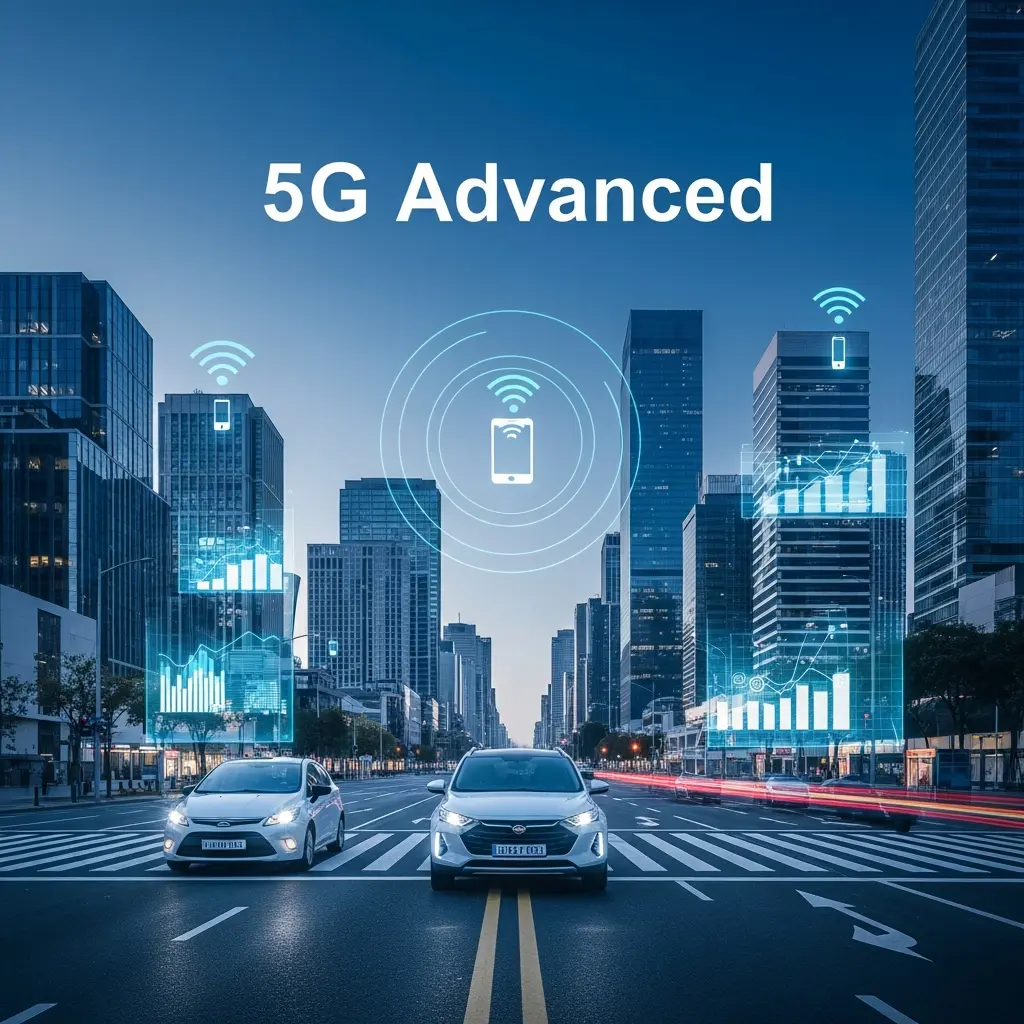
Imagine a world where your devices communicate with zero lag, autonomous vehicles navigate bustling streets flawlessly, and entire cities manage their energy grids in real-time. This is no longer science fiction, but the imminent reality brought forth by the latest evolution in telecommunications technology. Welcome to the era of 5G Advanced, the bridge to tomorrow’s hyper-connected ecosystem.
The Dawn of 5G Advanced in Telecommunications
As the digital landscape continuously shifts, the telecommunications industry is already looking beyond the initial rollouts of 5G networks. Enter 5G Advanced, often referred to as 5.5G. This new standard is not merely a supplementary update; it is a profound architectural enhancement that promises to redefine how consumers and industries interact with digital networks. While standard 5G introduced us to faster download speeds and lower latency, 5G Advanced is engineered to integrate artificial intelligence and machine learning natively into the core of the network. This intelligence allows the network to predict traffic patterns, self-optimize bandwidth allocation, and drastically reduce power consumption during off-peak hours.
The implications for telecommunications technology are staggering. For years, the industry has focused heavily on human-to-human or human-to-machine connectivity. Now, the paradigm is shifting toward massive machine-type communications (mMTC). This means the infrastructure is finally capable of handling millions of simultaneous connections within a single square kilometer without dropping a single packet of data. Whether it is an array of sensors in a smart factory or a fleet of delivery drones communicating in real-time, 5.5G acts as the invisible, ultra-reliable nervous system of the modern world.

By the Numbers: The Trajectory of Hyper-Connectivity
To truly grasp the magnitude of this technological leap, we must look at the data driving the investments and infrastructural upgrades worldwide. The adoption rates of advanced cellular networks are outpacing all previous generations of mobile technology.
According to a 2023 report by GSMA Intelligence, 5G connections are expected to reach 2 billion globally by the end of 2025, laying the vital groundwork and consumer readiness for 5G Advanced deployments. This massive user base provides the economic incentive for telecom operators to upgrade their cell towers and core networks to the 5.5G standard.
Furthermore, research from Ericsson in their widely cited Mobility Report highlights that IoT (Internet of Things) connections will top 34 billion by 2028. This exponential growth is largely driven by the enhanced capabilities of 5.5G networks, which provide the ultra-reliable low-latency communication required for mission-critical IoT deployments across various industrial sectors.
Revolutionizing Telecom Gadgets and Consumer Technology
Extended Reality (XR) and Spatial Computing
One of the most exciting aspects of 5G Advanced is its direct impact on consumer telecom gadgets. For a long time, virtual reality, augmented reality, and mixed reality—collectively known as extended reality (XR)—have been hindered by bulky hardware and tethered connections. Because processing heavy graphical data required significant local computing power, headsets remained large and battery life was notoriously short. 5.5G changes this dynamic by enabling split rendering. This telecommunications technology allows the heavy computational lifting to be processed in edge cloud servers, while the headset merely receives the final rendered images in milliseconds.
The result is a new generation of XR glasses that are indistinguishable from regular eyewear. These gadgets will rely on the 10 Gbps downlink speeds and sub-millisecond latency of 5G Advanced to overlay high-definition digital information onto the physical world flawlessly. From immersive remote learning experiences to highly interactive virtual workspaces, spatial computing will finally break free from the constraints of local hardware limitations.
Next-Generation Smart Home Routers and CPEs
Customer Premises Equipment (CPE) and smart home routers are also undergoing a massive transformation. As 5G Advanced rolls out, we will see the rise of fixed wireless access solutions that easily rival, and often surpass, traditional fiber-optic broadband. A 5.5G-enabled CPE gadget will pull multi-gigabit speeds from the cellular network and distribute them throughout the home using the latest Wi-Fi 7 standards. This synergy between advanced cellular and local wireless technologies ensures that every smart TV, gaming console, and connected device in the household enjoys a flawless, un-throttled connection, effectively democratizing high-speed internet access in areas where laying physical fiber cables is economically unviable.
Transforming Smart Cities and the Internet of Things (IoT)
Intelligent Traffic and Autonomous Transit
The vision of the smart city has long been a holy grail for urban planners and technologists alike. However, previous network iterations lacked the sheer capacity and reliability to make fully autonomous urban ecosystems a reality. With 5G Advanced, telecommunications technology finally meets the rigorous demands of smart city infrastructure. Consider the concept of vehicle-to-everything (V2X) communication. Autonomous vehicles require constant streams of data from traffic lights, pedestrian crosswalks, and other vehicles to make split-second driving decisions. 5.5G networks ensure that these critical data packets are prioritized and delivered without fail, drastically reducing traffic accidents and optimizing traffic flows to eliminate congestion.
Passive IoT and Sustainable Networks
Perhaps one of the most groundbreaking innovations introduced by 5G Advanced is the support for passive IoT. Unlike traditional IoT gadgets that require batteries or a direct power source to transmit data, passive IoT devices harvest ambient energy from the surrounding cellular radio waves. This capability is revolutionary for industries such as logistics, retail, and agriculture.
Imagine a smart city where millions of sensors monitor structural integrity on bridges, track inventory in warehouses, and measure soil moisture in public parks—all without ever needing a battery replacement. By eliminating the environmental and financial cost of manufacturing and disposing of billions of small batteries, telecommunications technology is taking a massive stride toward a greener, more sustainable future.
Practical Tips for Adapting to the 5G Advanced Era
As this new wave of connectivity approaches, both consumers and businesses must prepare their technological ecosystems to take full advantage of the upcoming capabilities. Embracing the future of telecom requires proactive steps today. Here are some actionable strategies to ensure you are ready for the 5.5G revolution:
-
- Audit Your Device Ecosystem: Evaluate your current telecommunications gadgets, including smartphones, routers, and wearables, to determine if they support upcoming firmware updates for advanced 5G networks, or if hardware upgrades will be necessary in the next upgrade cycle.
-
- Invest in Wi-Fi 7 Infrastructure: To maximize the benefits of 5G Advanced Fixed Wireless Access in your home or office, consider upgrading your local network to Wi-Fi 7. These new routers are specifically designed to seamlessly bridge incoming multi-gigabit cellular speeds to your local area network without creating bottlenecks.
- Prioritize IoT Cybersecurity: As the number of connected devices in your smart home or business grows, so does your potential attack surface. Proactively secure all telecom gadgets by changing default manufacturer passwords, enabling multi-factor authentication, and segmenting your IoT devices onto a separate guest network.
The Role of Artificial Intelligence in Network Management
It is impossible to discuss the future of telecommunications technology without highlighting the symbiotic relationship between 5G Advanced and Artificial Intelligence (AI). In legacy networks, human engineers were largely responsible for monitoring network health, identifying faults, and rerouting traffic during localized outages. This reactive approach is no longer sufficient for a network that supports critical infrastructure, remote robotic surgery, and autonomous transportation.
5.5G networks are inherently intent-driven. Operators can simply define a specific goal—such as maintaining a minimum latency threshold for a hospital’s network slice—and the AI core will autonomously adjust radio frequencies, allocate edge computing resources, and optimize the data path to ensure the goal is met. This autonomous, self-healing network architecture significantly reduces downtime and operational costs. Furthermore, it allows telecom companies to offer highly customized Service Level Agreements to enterprise clients, ensuring that every industry gets exactly the network performance it requires.
A Sustainable Approach to Global Connectivity
As global data consumption continues to skyrocket, the environmental impact of powering immense telecommunications networks has become a pressing concern. Fortunately, 5G Advanced is built with sustainability as a core design principle. While it offers up to ten times the capacity of early 5G networks, it does so with significantly greater energy efficiency per gigabyte of data transmitted. Advanced sleep modes allow cell towers to power down components dynamically during milliseconds of inactivity, drastically reducing the overall carbon footprint of the network.
This commitment to green telecommunications ensures that as we connect more gadgets and build smarter cities, we are not simultaneously degrading the planet. The technology industry is finally aligning its ambitious goals for hyper-connectivity with the urgent necessity of environmental stewardship.
Looking Ahead: The Human Element of Hyper-Connectivity
Ultimately, the evolution of telecommunications technology is about much more than raw speed, bandwidth, and impressive technical specifications. It is about empowering human potential. 5G Advanced represents a fundamental shift in our relationship with the digital realm. By removing the friction of latency and the limitations of local computing power, we are freeing ourselves to focus on creativity, innovation, and meaningful human connection.
The tools and gadgets of tomorrow will no longer be active distractions; instead, they will fade into the background, silently and intelligently anticipating our needs. Whether it is through immersive educational experiences that transport students to ancient civilizations, or smart agricultural systems that ensure food security for a growing global population, the ripple effects of this connectivity will touch every aspect of our lives.
As we stand on the threshold of this exciting new era in telecommunications, it is crucial to stay informed, adaptable, and open to the possibilities. We invite you to join our growing community of tech enthusiasts, innovators, and forward-thinkers. Share your thoughts in the comments below, join the conversation on our social forums, and together, let us explore the boundless opportunities that await in the hyper-connected world of tomorrow.